
What Safety Measures to Take During Concrete Renovation
When undertaking a concrete renovation project, you must prioritize safety above all else. Wear protective gear always, including hard hats, safety glasses, earplugs, dust masks, steel-toed boots, and gloves. Identify hazards in your workspace, including physical obstacles, air quality issues, and chemical risks. Guarantee the structural integrity of the building before starting work, and take measures to prevent falling debris risks. Control exposure to dust by wearing breathable clothing and using HEPA filters, and manage power tools safely to avoid accidents. By following these measures, you'll be well on your way to a safe renovation project, and understanding the nuances of each will only further safeguard your success.
Key Takeaways
• Wear personal protective equipment (PPE) like hard hats, safety glasses, and gloves to prevent physical harm from debris and materials.
• Identify and assess hazards in the workspace, including physical obstacles, air quality, and chemical risks to develop a plan for mitigation.
• Ensure structural integrity by engaging a qualified engineer, inspecting foundations, walls, floors, and roofs, and addressing any weaknesses or damage.
• Control debris and dust by installing barriers, using dustless equipment, and implementing containment measures to minimize exposure and prevent falling hazards.
• Develop an emergency response plan, including evacuation procedures, assigned roles, and regular review and updates to ensure preparedness in case of accidents.
Wear Protective Gear Always
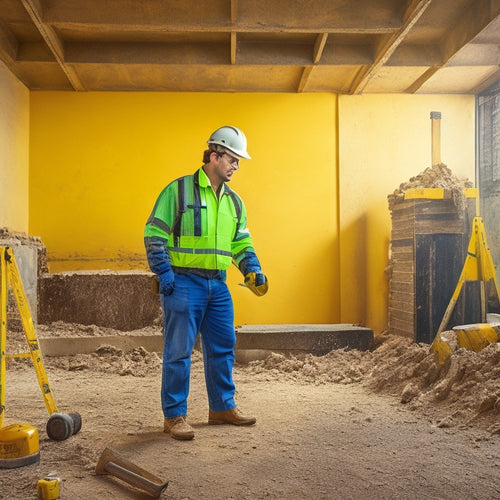
During concrete renovation projects, always wear protective gear, including hard hats, safety glasses, earplugs, dust masks, gloves, and steel-toed boots, to shield yourself from potential hazards. You can't afford to take chances when it comes to your safety.
Wearing the right protective clothing is essential to preventing injuries and illnesses. Safety goggles, for instance, will protect your eyes from flying debris and chemical splashes. Dust masks will filter out harmful airborne particles, while earplugs will reduce the risk of hearing loss from loud machinery.
Gloves will provide grip and protection for your hands, and steel-toed boots will prevent crushing injuries to your feet. Don't underestimate the importance of wearing the right gear. It's not just about following regulations; it's about taking care of yourself and ensuring you can continue working safely and effectively.
Identify Hazards in Workspace
As you prepare for concrete renovation, you'll need to identify potential hazards in your workspace.
Take a close look around you and assess the physical obstacles that could cause tripping, falling, or other accidents.
You'll also need to check the air quality and identify any chemical risks that could pose a threat to your health or safety.
Assess Physical Obstacles
You must meticulously survey the workspace to identify physical obstacles that could hinder renovation progress or pose safety risks, such as uneven flooring, exposed wiring, or overhead obstructions.
As you assess the workspace, pay attention to physical barriers that could impede your movement or create tripping hazards. Developing spatial awareness is essential in this stage, as it enables you to visualize the renovation process and anticipate potential risks.
Be on the lookout for the following physical obstacles:
-
Weak or damaged flooring that could collapse underfoot
-
Exposed wiring or pipes that could cause electrical shock or tripping
-
Overhead obstructions such as low-hanging pipes or ductwork that could strike your head
-
Narrow walkways or tight spaces that could restrict movement or create claustrophobia
-
Unstable or heavy objects that could fall and cause injury
Check Air Quality
With the physical obstacles accounted for, it's now essential to inspect the workspace for airborne hazards that could compromise your health and safety.
As you begin concrete renovation, you'll likely generate airborne particles, dust, and gases that can be detrimental to your well-being. To mitigate these risks, you must conduct air quality testing to identify potential hazards. This involves monitoring the air for particulate matter, volatile organic compounds, and other airborne contaminants.
Next, assess your ventilation systems to verify they're functioning correctly. Proper ventilation is vital in removing airborne hazards from the workspace. Check that ventilation systems are well-maintained, and filters are replaced regularly.
Additionally, consider implementing supplementary ventilation measures, such as portable air purifiers or local exhaust ventilation systems, to provide an added layer of protection.
Identify Chemical Risks
As you begin your concrete renovation project, it's crucial to identify potential chemical risks in your workspace. Two potential sources of chemical risks in your workspace are the concrete itself and the materials you'll be using for renovation, which can release hazardous substances or react with other chemicals to produce harmful byproducts.
To mitigate these risks, you must take steps to identify and evaluate the hazards. This includes:
-
Reviewing safety data sheets (SDSs) for all materials and substances you'll be using
-
Identifying potential chemical exposure routes (inhalation, skin contact, ingestion)
-
Determining the concentration and quantity of hazardous substances present
-
Evaluating the likelihood and potential severity of chemical accidents
-
Developing a plan to minimize chemical exposure and respond to emergencies
Ensure Structural Integrity First
Prior to commencing any concrete renovation, a thorough assessment of the existing structure's load-bearing capacity and potential weaknesses must be conducted to guarantee its stability and prevent catastrophic failures.
You'll need to engage a qualified structural engineer or expert to perform a detailed structural assessment, which includes a foundation evaluation. This assessment will identify any potential weaknesses, such as cracks, corrosion, or settlement issues, and determine the structure's ability to support the intended loads.
During the assessment, the engineer will inspect the foundation, walls, floors, and roofs to identify any signs of distress or damage. They'll also review the original building plans, if available, to understand the structure's design intent and any modifications made over time.
Based on the assessment results, you'll be able to develop a renovation plan that addresses any structural issues, ensuring the safety of the building occupants and workers.
Prevent Falling Debris Risks
You must implement measures to prevent falling debris risks, which can cause serious injury or fatalities, by making certain that loose materials are securely fastened or removed from the renovation site. Debris falling from heights can be deadly, and it's your responsibility to take proactive steps to mitigate this risk.
Here are some essential measures to take:
-
Install debris barriers around the perimeter of the site to catch falling objects and prevent them from leaving the site.
-
Make certain that all workers wear hard hats and safety glasses to protect themselves from falling debris.
-
Conduct regular site inspections to identify and remove loose materials that could fall and cause harm.
-
Install netting or catch platforms under elevated work areas to catch falling objects.
-
Post clear site signage to warn workers and visitors of the risks associated with falling debris and the measures you're taking to prevent it.
Manage Power Tools Safely
Manage Power Tools Safely
Operate power tools with caution, guaranteeing that cords are free from damage, and tools are properly maintained to prevent electrical shocks, entanglements, and other hazards. You should regularly inspect your power tools for signs of wear and tear, and perform routine tool maintenance to prevent malfunctions. This includes checking for frayed cords, worn-out brushes, and loose parts.
Additionally, make sure you're properly trained on the safe use of each power tool, as improper use can lead to accidents. Invest in power tool training to learn how to handle tools correctly, and understand their limitations. This training will also teach you how to respond in case of an emergency, such as a tool malfunction or electrical shock.
Control Exposure to Dust
When renovating concrete, you'll inevitably encounter dust, a hazardous substance that can cause respiratory issues and other health problems.
To minimize your exposure, you'll need to take proactive measures to control the spread of dust on your job site.
Wear Protective Gear
Frequently, concrete renovation projects generate massive amounts of dust, which can be hazardous to your health. This makes it essential to wear protective gear to control exposure. You don't want to compromise your health, so it's vital to take the necessary precautions.
Wearing protective clothing is a must when working with concrete. You should don:
-
Breathable protective clothing: Coveralls, jackets, or pants that prevent dust from penetrating to your skin.
-
Safety goggles: Shields that protect your eyes from dust and debris.
-
Dust mask or respirator: Equipment that filters the air you breathe, preventing inhalation of hazardous particles.
-
Gloves: Hand protection that prevents skin irritation and abrasion.
-
Steel-toed boots: Footwear that safeguards your feet from heavy objects and sharp edges.
Use Dustless Equipment
To minimize the risk of dust inhalation and exposure, invest in dustless equipment, such as vacuum-assisted power tools, that capture or suppress dust at the source, thereby reducing the amount of airborne particles. This type of equipment is designed to minimize dust emission, making it an essential investment for your concrete renovation project. By using dustless equipment, you'll greatly reduce the risk of respiratory problems and other health issues associated with dust inhalation.
When selecting dustless equipment, look for units with built-in dust extraction systems that can capture 99.9% of dust particles. Regular equipment maintenance is also vital to guarantee peak performance and extend the lifespan of your dustless equipment. Make sure to follow the manufacturer's maintenance schedule and guidelines to keep your equipment in top condition.
Contain Work Area
You can markedly reduce the spread of dust by establishing a containment zone around your work area, which involves sealing off the perimeter with plastic sheets or tarps to prevent dust from escaping. This is essential in controlling exposure to dust, a significant hazard during concrete renovation.
To guarantee effective containment, consider the following:
-
Clearly define worksite boundaries with safety signage to prevent unauthorized access and minimize foot traffic.
-
Seal all gaps and openings, including doors, windows, and vents, to prevent dust from spreading to adjacent areas.
-
Use a decontamination zone to remove dust and debris from tools, equipment, and personnel before they leave the work area.
-
Regularly inspect and maintain the containment zone to guarantee its integrity.
-
Train your team on the importance of containment and ensure they understand their role in maintaining the zone.
Plan for Emergency Situations
During concrete renovation projects, unexpected events can occur, and having a thorough emergency response plan in place helps guarantee a swift and effective reaction. You must identify potential hazards and develop emergency protocols to address them. This includes establishing evacuation plans, designating assembly points, and assigning team members to assist in emergency situations. Confirm that all personnel are familiar with the emergency response plan and understand their roles in executing it.
In the event of an emergency, every minute counts. Having a well-rehearsed plan in place enables you to respond quickly and efficiently, minimizing the risk of injury or damage. Make certain to regularly review and update your emergency response plan to reflect changes in the project scope, personnel, or site conditions.
Maintain Clear Worksite Areas
Clearing the worksite of debris and obstructions is vital to preventing accidents and guaranteeing a smooth concrete renovation process. As you begin your project, make certain to maintain a clear worksite by keeping all pathways and walkways free from clutter. This won't only prevent tripping hazards but also allow for efficient movement of materials and equipment.
Here are some essential tips to keep in mind for maintaining clear worksite areas:
-
Designate specific zones for materials, tools, and equipment to avoid clutter buildup.
-
Implement a regular cleaning schedule to remove debris and dust.
-
Establish clear pathways for workers to follow, making sure they can move safely around the site.
-
Confirm all electrical cords and hoses are properly secured and out of walkways.
-
Assign a team member to oversee worksite organization and enforce cleanliness standards.
Frequently Asked Questions
Can I Reuse Old Concrete for Renovation Projects?
You can reuse old concrete for renovation projects, leveraging concrete recycling benefits like reduced waste and costs. Consider old concrete applications like aggregate, road base, or even new concrete mixes, but guarantee its quality meets project requirements.
How Do I Safely Remove Existing Flooring Materials?
As you commence on a flooring demolition, imagine a ticking time bomb of dust and debris; to defuse it, employ floor removal techniques like mechanical scraping or chemical stripping, donning protective gear like respirators and gloves to shield yourself from the blast.
Are There Specific Safety Protocols for Nighttime Renovations?
When you're planning nighttime renovations, you'll need to prioritize nighttime visibility and mitigate worker fatigue by implementing enhanced lighting strategies and scheduling regular breaks to guarantee a safe and efficient work environment.
Can I Renovate Concrete in Extreme Weather Conditions?
'When in doubt, wait it out' rings true for concrete renovation in extreme weather. You'll need to carefully assess weather considerations, such as temperature and humidity, and employ specialized insulation techniques to guarantee a successful project.
Do I Need Special Permits for Large-Scale Concrete Renovations?
You'll need to navigate complex construction regulations, ensuring you submit thorough permit applications, as large-scale concrete renovations often require approvals from local authorities, which can be a time-consuming but essential step in your project.
Conclusion
As you wrap up your concrete renovation project, remember that safety isn't a destination, but a journey.
You've navigated the treacherous landscape of hazards and risks, and now it's time to reap the rewards of a job well done.
Don't let complacency creep in - stay vigilant and maintain a safety-first mindset to guarantee a successful outcome.
With these measures in place, you'll be able to stand back and admire your handiwork, proud of a job that's not only beautifully renovated, but also safely executed.
Related Posts
-

Create a Home Renovation Project Timeline in Excel
You can create a detailed home renovation project timeline in Excel by setting up a tailored template with separate w...
-

What Plastering Tools Do You Need for Renovation
You'll need a range of specialized tools to tackle a plastering renovation project efficiently and effectively. Essen...
-
5 Vital Safety Tips for DIY Renovation Success
When tackling a DIY renovation, you'll need to prioritize safety above all else. Start by protecting yourself from fl...
