
Top Demolition Tools for Home Renovation Projects
When tackling a home renovation project, you'll need a range of specialized demolition tools to work efficiently and safely. Essential safety gear like safety goggles, hard hats, and steel-toed boots should be your first priority. For concrete demolition, consider pneumatic breakers, electric demolition hammers, or hydraulic concrete crushers, depending on the scope of your project. Concrete saws, demolition robots, and hand tools like pry bars and sledgehammers are also vital for specific tasks. With the right tools and techniques, you'll be able to tackle your renovation project with confidence - and discover the best approaches for your unique situation.
Key Takeaways
• Safety goggles and hard hats are essential for protecting yourself from flying debris and dust during demolition.
• Pneumatic breakers and electric demolition hammers are effective for breaking up concrete slabs and foundations.
• Hydraulic concrete crushers and concrete saws are ideal for larger-scale demolition projects and cutting through thick concrete.
• Demolition robots and excavator attachments can be used for heavy lifting and efficient material handling in larger projects.
• Hand tools like pry bars, sledgehammers, and wrecking bars are versatile and necessary for smaller, more delicate demolition tasks.
Essential Safety Gear for Demolition
Before starting any demolition project, you must wear essential safety gear to protect yourself from potential hazards. This gear is vital in preventing injuries and ensuring a safe working environment.
To begin with, you'll need safety goggles to shield your eyes from flying debris, dust, and other particles. Make sure they fit snugly and have anti-fog coatings to maintain clear visibility.
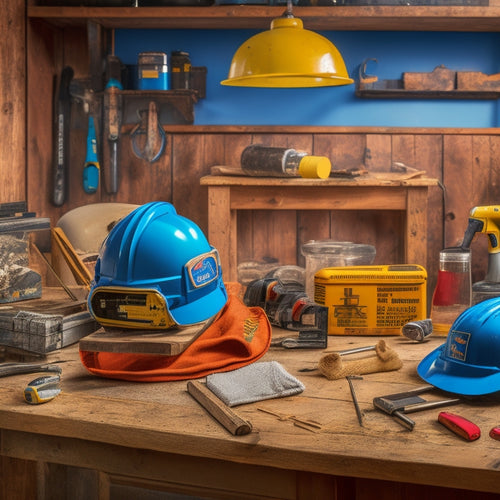
Next, don a hard hat to protect your head from falling objects, collapsing structures, and other overhead hazards. Look for hats with a sturdy shell, adjustable suspension, and a chin strap for a secure fit.
Additionally, consider wearing earplugs or earmuffs to reduce noise exposure, as demolition work can generate high decibel levels.
Steel-toed boots with good traction are also essential for protecting your feet from heavy objects and preventing slips.
Don't forget to wear gloves with grip, cut resistance, and puncture protection to safeguard your hands.
Finally, wear a dust mask or respirator to prevent inhaling hazardous particles.
Pneumatic Breakers for Concrete
When tackling concrete demolition, you'll likely need a pneumatic breaker, a powerful tool capable of breaking up thick concrete slabs, sidewalks, and foundations with ease. These tools utilize compressed air to drive a piston, generating a high-impact force that can shatter concrete quickly and efficiently.
Pneumatic breakers are ideal for various applications, including foundation removal, roadwork, and building demolition.
Regular pneumatic breaker maintenance is vital to guarantee peak performance and extend the tool's lifespan. You should regularly inspect the air hose for signs of wear, clean the breaker's air filter, and lubricate moving parts.
Additionally, it's important to follow the manufacturer's guidelines for breaker bit replacement and to store the tool properly when not in use.
Pneumatic breaker applications are diverse, ranging from small-scale DIY projects to large-scale commercial demolition jobs. They're particularly useful for breaking up concrete in confined spaces or areas with limited access.
With proper maintenance and handling, a pneumatic breaker can be a valuable asset for any concrete demolition project. By choosing the right pneumatic breaker for your specific needs, you'll be able to tackle even the most demanding concrete demolition tasks with confidence.
Electric Demolition Hammer Options
While pneumatic breakers excel in heavy-duty concrete demolition, you may prefer electric demolition hammers for smaller to medium-scale projects or when working in areas with limited air compressor access.
Electric hammers offer a more compact and lightweight design, making them ideal for tighter spaces and smaller projects. They're also quieter and produce fewer vibrations, reducing operator fatigue.
When selecting an electric demolition hammer, consider the following key features:
-
Variable speed control: allows you to adjust the hammer's speed to suit the task at hand.
-
High-torque motors: provide the power you need to tackle tough demolition tasks.
-
Ergonomic design: reduces fatigue and improves control, making it easier to work for extended periods.
Electric demolition hammers come in various types, including rotary hammers, demolition hammers, and chipping hammers.
Each type is designed for specific tasks, so it's crucial to choose the right one for your project. Look for electric hammer features that meet your specific needs, such as adjustable handles, LED lights, and dust protection.
With the right electric demolition hammer, you'll be able to tackle your project efficiently and effectively.
Hydraulic Concrete Crushers
When you're working with hydraulic concrete crushers, you'll want to contemplate their crushing force capacity, as this directly affects the size and type of concrete you can process.
You'll also need to think about demolition speed efficiency, as this impacts the overall productivity of your project.
Crushing Force Capacity
How much crushing force do you need to demolish a concrete structure, and what hydraulic concrete crusher can deliver that capacity?
When selecting a hydraulic concrete crusher, it's crucial to take into account the crushing force required for your specific project. Crushing techniques, such as pulverizing or cracking, require varying levels of force measurement.
To determine the necessary crushing force, you'll need to assess the strength and thickness of the concrete, as well as the desired demolition outcome. Here are some key factors to keep in mind:
-
Concrete strength: The compressive strength of the concrete will impact the required crushing force. Higher strength concrete demands more force to demolish.
-
Demolition method: Different demolition methods, such as pulverizing or cracking, require distinct force measurements to achieve the desired outcome.
-
Crusher capacity: Verify the hydraulic concrete crusher you choose can deliver the necessary force capacity to efficiently demolish the concrete structure.
Demolition Speed Efficiency
You need a hydraulic concrete crusher that can efficiently demolish concrete structures at a pace that meets your project's timeline and budget, making demolition speed a vital factor in your selection process.
When evaluating demolition tools, you'll want to take into account the crusher's production rate, measured in tons per hour, to guarantee it can keep up with your project's demands. A higher production rate translates to faster demolition, which can greatly reduce labor costs and project duration.
In addition to production rate, you should also take into account the crusher's demolition techniques, such as its ability to crush concrete into manageable sizes, reducing the need for additional processing. This not only saves time but also reduces waste disposal costs.
Effective project planning is essential to guarantee that your demolition tool selection aligns with your project's requirements. By selecting a hydraulic concrete crusher that meets your project's specific needs, you can optimize your demolition process, reduce costs, and stay on schedule.
Best Concrete Saw Choices
When you're preparing to cut through concrete slabs, you'll need a reliable concrete saw that can handle the job.
To select the right tool, you'll want to contemplate the type of blade you'll need, as different blades are suited for specific tasks and concrete types.
Cutting Concrete Slabs
Cutting concrete slabs requires a powerful and precise tool, as it involves breaking through a dense, hardened material that can be hazardous to work with if not handled properly.
You'll need to master various cutting techniques to get the job done efficiently and safely.
Before you start cutting, make sure you've prepared the concrete properly. This includes cleaning the surface, marking the cutting line, and ensuring the area is well-ventilated.
Here are some key considerations to keep in mind:
-
Wet cutting: This technique uses a constant flow of water to cool the blade and reduce dust. It's ideal for large-scale projects and helps prevent overheating.
-
Dry cutting: This method uses a vacuum or dust collection system to minimize dust. It's better suited for smaller projects and requires more frequent blade maintenance.
-
Core drilling: This technique involves drilling a hole in the concrete to create a hole or conduit. It's useful for precise, circular cuts and requires specialized equipment.
Blade Selection Guide
Blade Selection Guide
Selecting the right blade for your concrete saw is essential, as it directly impacts the efficiency, safety, and quality of your cuts. With so many options available, it can be overwhelming to choose the best blade for your project. However, understanding the different blade types and materials can make all the difference.
Here's a breakdown of popular blade options:
| Blade Type | Best For |
|---|---|
| Diamond Blade | Cutting through hard concrete, asphalt, and stone |
| Abrasive Blade | Cutting through soft concrete, brick, and block |
| Segmented Blade | General-purpose cutting, ideal for most concrete projects |
When choosing a blade, consider the material you're cutting, the depth of the cut, and the power of your saw. Diamond blades are ideal for tough materials, while abrasive blades are better suited for softer materials. Segmented blades offer a balance between the two. Remember to always follow the manufacturer's recommendations and safety guidelines when using your concrete saw and blade.
Demolition Robot for Heavy Lifting
You'll likely need a demolition robot for heavy lifting when tackling large-scale demolition projects that require moving massive debris, concrete slabs, or heavy machinery.
These robots are designed to handle the toughest tasks, reducing the risk of injury and increasing efficiency. With robotic automation, you can precision-control the robot's movements, ensuring accurate demolition and minimizing damage to surrounding structures.
Some key features to look for in a demolition robot include:
-
Remote operation: allowing you to control the robot from a safe distance, reducing the risk of injury.
-
High-torque hydraulic systems: providing the power needed to move heavy debris and machinery.
-
Advanced sensor technology: enabling the robot to detect and adapt to changing environments and obstacles.
Hand Tools for Small Demolition
When tackling smaller demolition projects or precision tasks, such as removing tile, flooring, or cabinetry, hand tools are often the preferred choice for their versatility, control, and ease of use.
You'll find that hand tools provide the precision and finesse required for delicate demolition tasks. A pry bar, for instance, is ideal for gently prying apart surfaces without causing excessive damage. Its uses range from removing baseboards to dismantling cabinetry.
On the other hand, a sledge hammer is perfect for applying controlled force to break up smaller areas, such as tile or concrete. Mastering sledge hammer techniques, like using a controlled swing and aiming for the correct spot, will make your demolition tasks more efficient.
Additionally, hand tools like wrecking bars, bolt cutters, and pliers are essential for various demolition tasks. By having these tools in your arsenal, you'll be well-equipped to tackle smaller demolition projects with confidence and precision.
Demolition Attachment for Excavators
With excavators playing a crucial role in large-scale demolition projects, utilizing the right demolition attachment can greatly enhance their capabilities and efficiency.
As you consider which attachment to use, it's important to understand the various excavator attachment types available. These attachments can transform your excavator into a demolition powerhouse, allowing you to tackle complex projects with ease.
Some of the most popular demolition attachment options include:
-
Crusher buckets: Ideal for crushing concrete, rocks, and other materials into smaller, manageable pieces.
-
Demolition grapples: Designed for heavy-duty demolition, these attachments provide a secure grip on materials, making it easy to tear them down.
-
Pulverizers: Perfect for pulverizing concrete and other materials, these attachments can reduce debris into recyclable materials.
Chiseling and Scraping Tools
As you move on to finer demolition tasks, chiseling and scraping tools come into play to help you refine your demolition process. These tools are designed for more precise demolition work, allowing you to remove specific materials without causing unnecessary damage.
When it comes to chiseling, mastering various chisel techniques is vital. You'll need to choose the right chisel for the job, considering factors like material, size, and handle type. For example, a flat chisel is ideal for breaking up concrete, while a pointed chisel is better suited for removing tile or brick.
Scraping methods are also important for removing old adhesives, paint, or other stubborn substances from surfaces. You'll need to select the appropriate scraping tool, such as a putty knife, scraper, or wire brush, depending on the surface and material you're working with.
Frequently Asked Questions
What Is the Best Way to Dispose of Demolition Waste Materials?
When you're dealing with demolition waste materials, you'll want to handle disposal efficiently and responsibly.
You should prioritize demolition waste management by separating materials that can be recycled from those that can't. Recycling construction debris, such as concrete, asphalt, and wood, reduces the environmental impact and saves you money on landfill fees.
You can partner with a reputable waste management company or rent a dumpster specifically designed for construction waste.
Can I Rent Demolition Tools or Should I Buy Them?
You're wondering whether to rent or buy demolition tools. Let's investigate the theory that renting is only suitable for one-time projects.
While it's true that renting offers flexibility and lower upfront costs, buying can be more cost-effective in the long run, especially if you plan to tackle multiple projects.
Consider your renting needs: will you need the tools frequently or infrequently?
Weigh the buying advantages, such as having the tools readily available and avoiding rental logistics, against the costs.
How Do I Choose the Right Demolition Tool for My Project Size?
When selecting a demolition tool, you'll need to take into account your project's size and scope. Evaluate the area to be demolished, the material type, and the desired level of destruction.
This will help you choose between various demolition tool types, such as hydraulic breakers, wrecking bars, or reciprocating saws. Reflect on the tool's power output, weight, and maneuverability to guarantee it can efficiently tackle your project.
What Are the Advantages of Using Cordless Demolition Tools?
When you opt for cordless demolition tools, you'll appreciate the advancements in battery technology that provide reliable power and extended runtime.
Additionally, you'll benefit from improved tool safety since there are no cords to get in the way or cause tripping hazards.
This allows you to focus on the task at hand, increasing your productivity and reducing the risk of accidents.
Are Demolition Tools Typically Covered Under a Home Warranty?
As you navigate the complex landscape of home ownership, you're like a sailor charting through treacherous waters.
You're wondering, are demolition tools typically covered under a home warranty? The answer is, it depends.
Most warranties won't cover damage caused by your DIY demolition adventures, but some may provide coverage for faulty tools.
Review your policy carefully to identify tool exclusions and warranty coverage limitations.
Conclusion
As you wrap up your demolition project, step back and gaze upon the rubble-strewn landscape, a proof of your unyielding resolve.
The dust settles, revealing a blank canvas, ripe for transformation.
With the right arsenal of demolition tools, you've conquered concrete, steel, and wood, releasing a torrent of possibilities.
Your renovation vision takes shape, a phoenix rising from the ashes of the old, forged in the fire of determination and precision.
Related Posts
-

Create a Home Renovation Project Timeline in Excel
You can create a detailed home renovation project timeline in Excel by setting up a tailored template with separate w...
-
Top 3 Safety Essentials for DIY Renovations
When tackling a DIY renovation, you'll want to prioritize three essential safety items to protect yourself from poten...
-

3 Best Planter Shopping Timeline Tips for Renovators
When incorporating planters into your renovation project, you'll want to plan carefully to avoid delays and guarantee...
