
7 Best Tools to Buy for Home Renovation Success
When it comes to home renovation success, having the right tools is essential. You'll need effective tool organization and storage solutions to keep your tools protected and within reach. Invest in a sturdy toolbox with compartments and dividers to keep your tools organized. Must-have scratch and float tools, like a scratch awl and float, will help you achieve professional-looking stucco finishes. Don't forget to add a high-quality finishing trowel, stucco edger, and darby to your toolkit. With the right tools, you'll be well on your way to achieving a successful home renovation - and that's just the beginning of what you can accomplish.
Key Takeaways
- Invest in sturdy, mobile storage containers or toolboxes with compartments and dividers to protect and organize tools efficiently.
- Essential stucco tools, such as scratch awl, float, and finishing trowel, ensure high-quality finishes and efficient application.
- Ergonomic handle design in trowels reduces fatigue and improves grip strength, leading to better results and reduced strain.
- A stucco repair kit should include high-quality stucco mix, putty knife or trowel, level, and sturdy brush for effective repairs.
- Premium stucco application equipment, like stucco pumps, fiber-mesh sprayers, and automatic trowel machines, enhance efficiency and quality of finishes.
Essential Stucco Tool Storage Solutions
How do you keep your stucco tools organized and within reach when working on a project? Effective stucco tool organization is vital for completing tasks efficiently and avoiding wasted time searching for misplaced tools.
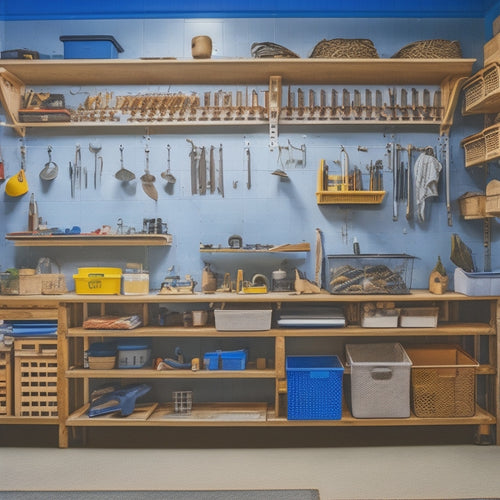
Portable storage solutions are important for stucco contractors and DIY enthusiasts alike. Invest in a sturdy, mobile storage container or toolbox specifically designed for stucco tools. This will help you keep all your tools in one place, making it easy to transport them to and from the job site.
Consider a storage system with compartments and dividers to keep tools organized and protected. This will prevent damage and rust, extending the lifespan of your tools.
Label each compartment to guarantee you can quickly locate the tool you need. A well-organized storage system also helps you identify which tools are missing, making it easier to restock or replace them as needed.
Must-Have Scratch and Float Tools
Tackle your stucco project with confidence by stocking up on the essential scratch and float tools. You'll need a scratch awl, a scratch rake, and a float to achieve a smooth, even finish.
The scratch awl is used to apply the scratch coat, creating the texture and pattern for the final finish. Command the scratch technique by holding the awl at a 45-degree angle and scratching in a consistent, overlapping pattern.
Next, use the scratch rake to remove excess material and create a uniform surface. This tool is also used to apply the brown coat, which provides additional strength and durability.
Finally, the float is used to apply the finish coat, smoothing out the surface and creating a uniform texture. For a successful float application, hold the float at a 45-degree angle and use long, sweeping strokes to spread the material evenly.
With these must-have scratch and float tools, you'll be well on your way to achieving a professional-looking finish.
Best Stucco Finishing Tool Options
With your scratch and float tools in hand, you're ready to move on to the final stage of stucco finishing. This is where you'll achieve the desired texture and appearance of your stucco surface. For this, you'll need a set of specialized tools that will help you master various stucco texture techniques.
Invest in a high-quality finishing trowel, which will allow you to apply the best stucco mixes and achieve a smooth, even finish. A finishing trowel with a curved blade is ideal for creating intricate textures and patterns.
You'll also need a stucco edger, which is used to create clean, sharp edges around windows, doors, and other areas where the stucco meets other surfaces.
Additionally, a stucco darby is essential for smoothing out the surface and removing any imperfections. This tool is particularly useful for creating a uniform texture and ensuring that the stucco is evenly distributed.
With these tools in your arsenal, you'll be well on your way to achieving a professional-looking stucco finish that will enhance the beauty and value of your home.
Top-Notch Plastering Trowel Selection
When selecting a plastering trowel, you're not just grabbing any tool off the shelf - you're choosing a partner for a job that requires precision and control.
The material your trowel is made of matters, as it affects the quality of your finish and the ease of your workflow.
You'll also want to take into account the ergonomics of the handle, as a comfortable grip can make all the difference in a long day of plastering.
Trowel Material Matters
Trowel Material Matters
Your grip on the trowel's handle is firm, but what about the material it's made of? The material can greatly impact your plastering experience and the quality of your finish. You'll come across trowels made from stainless steel, carbon steel, and fiberglass. Each material has its pros and cons.
| Material | Characteristics |
|---|---|
| Stainless Steel | Resistant to rust, durable, and easy to clean. Ideal for working with lime-based plasters. |
| Carbon Steel | Strong, flexible, and affordable. Suitable for general-purpose plastering. |
| Fiberglass | Lightweight, corrosion-resistant, and non-conductive. Best for working with epoxy-based plasters. |
When choosing a trowel material, consider the type of plaster you'll be working with and the level of maintenance you're willing to commit to. For instance, stainless steel trowels require minimal maintenance, while carbon steel trowels need regular cleaning and oiling to prevent rust. Selecting the right material will guarantee you get the best results from your plastering project.
Handle Ergonomics Counts
Your grip strength is only as good as the handle that supports it. When it comes to choosing a superior plastering trowel, handle ergonomics counts. You'll be holding onto that handle for hours, and a poorly designed one can lead to fatigue, discomfort, and even injury.
Look for a handle with an ergonomic design that fits comfortably in your hand. A contoured grip will reduce strain on your wrist and fingers, allowing you to work for longer periods without rest.
Handle comfort is key to maintaining your grip strength and overall performance. A good handle should also provide adequate support and balance. This will help you maintain control over the trowel, ensuring smooth, even strokes and a professional finish.
Don't settle for a flimsy or slippery handle that can compromise your work. Invest in a high-quality trowel with an ergonomic handle, and you'll be rewarded with improved results and reduced fatigue. Your hands will thank you.
Crucial Stucco Repair Kit Essentials
Stucco repair kits are only as good as the tools and materials they contain, which is why it's essential to verify your kit includes the right essentials for a successful repair job. You don't want to find yourself in the middle of a repair with subpar materials, leading to common stucco mistakes that can cost you time and money.
When selecting a stucco repair kit, make sure it includes a high-quality stucco mix that matches your original stucco's texture and color. A putty knife or trowel is necessary for applying the mix, and a level will help you achieve a smooth, even finish.
Don't forget a sturdy brush for applying bonding agents and a mixing bucket for combining the stucco mix with water. Mastering stucco repair techniques requires the right tools and materials.
A good kit will also include a fiberglass mesh for added strength and a weather-resistant barrier to prevent future damage. By investing in an all-encompassing stucco repair kit, you'll be well on your way to a successful and long-lasting repair.
Vital Stucco Sanding and Grinding
After applying the stucco mix and achieving a smooth, even finish, it's time to focus on refining the surface. Sanding and grinding are essential steps in stucco surface preparation, ensuring a strong bond between the stucco and the substrate.
You'll need the right tools for the job, including a dustless sanding system, a grinder with a diamond cup wheel, and a variety of sandpaper grits.
When it comes to sanding technique tips, remember to work progressively through the grits, starting with coarse and moving to finer. This will help you achieve a smooth, even finish.
Always sand in a circular motion, applying moderate pressure. Avoid applying too much pressure, which can create scratches or swirl marks.
For areas with heavy texture or imperfections, use a grinder with a diamond cup wheel to quickly remove material.
Premium Stucco Application Equipment
For a professional-looking stucco finish, you'll need the right application equipment to get the job done efficiently and effectively.
With the right tools, you can achieve advanced stucco texture techniques and excel in complex designs.
Here are three premium stucco application equipment you should consider:
-
Stucco pumps: These pumps allow you to apply stucco quickly and evenly, reducing labor time and ensuring a uniform finish.
-
Fiber-mesh sprayers: These sprayers enable you to apply fiber-mesh reinforcement to your stucco, providing added strength and durability.
-
Automatic trowel machines: These machines simplify the application process, allowing you to achieve a smooth, consistent finish with minimal effort.
Frequently Asked Questions
Can I Use Stucco Tools for Other Masonry or Construction Projects?
You can definitely repurpose stucco tools for other masonry or construction projects, leveraging their versatility to enhance efficiency in tasks like plastering, drywalling, or even concrete finishing, giving you more bang for your buck.
How Often Should I Clean and Maintain My Stucco Tools?
Think of your stucco tools as a finely-tuned orchestra: each piece needs regular tuning to perform in harmony. You should clean and maintain them after every use, and schedule regular deep cleaning every 1-2 months to guarantee peak performance and extend their lifespan.
Are Stucco Tools Compatible With Different Types of Stucco Materials?
You'll find that stucco tools are generally compatible with different stucco types, such as traditional, synthetic, or insulated concrete forms, but it's crucial to check the manufacturer's specs to verify the tool won't damage your specific stucco material.
Can I Rent Stucco Tools Instead of Buying Them?
You can rent stucco tools, which is a cost-effective option, especially if you're working on a small project or only need them for a short period, allowing you to enjoy significant cost savings without sacrificing quality results.
Do I Need Special Training to Use Stucco Tools Effectively?
Imagine a canvas of smooth stucco, a masterpiece awaiting your skilled touch. You'll need to become proficient in stucco application techniques and prioritize tool safety practices to guarantee a flawless finish; online tutorials and practice will be your best teachers, so get learning!
Conclusion
You've got the vision, now arm yourself with the right tools for a home renovation that's a cut above the rest. With these seven essentials in your arsenal, you'll be well on your way to a stucco finish that shines like a work of art. From storage solutions to finishing touches, you'll be the conductor orchestrating a harmony of success. So, don't let your project fall flat - strike the right chord with the best tools for the job.
Related Posts
-

Affordable Plastering Tools for Home Renovation Success
You're taking the first step towards a successful home renovation by investing in the right plastering tools. Start w...
-

Streamline Your Exterior Renovation Timeline
To streamline your exterior renovation timeline, you'll need to approach the process strategically. Start by planning...
-
7 Best Tool Storage Ideas for Home Renovation
When it comes to home renovation, staying organized is key to maximizing productivity and minimizing wasted time. To ...
