
Why Stucco Renovations Require the Right Toolbox
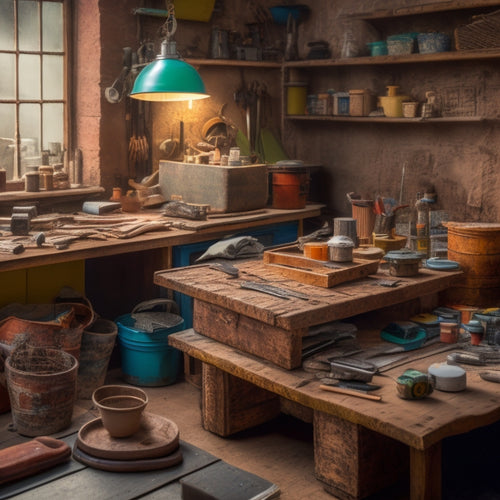
When tackling stucco renovations, you'll greatly reduce the risk of costly mistakes, project delays, and subpar results by investing in a thorough toolbox tailored to the unique demands of stucco work. Your toolbox should include essential hand tools like trowels, putty knives, and hawks, as well as power tools such as drilling tools and sanding tools. Specialized equipment for corners, finishing tools, and safety gear are also vital. Don't forget measuring and testing devices, and organization and storage solutions to keep your tools within reach. With the right tools, you'll be well on your way to achieving professional-grade results - and there's more to explore to guarantee your project's success.
Key Takeaways
• Having the right tools ensures proper application, finishing, and safety, resulting in a successful stucco renovation project.
• A well-stocked toolbox enables professionals to tackle various tasks efficiently, reducing project timelines and costs.
• The right tools help achieve precise measurements, ensuring compliance with building codes and preventing costly rework.
• Specialized tools, such as corner tools and texture application tools, allow for customization and precision in stucco renovations.
• Without the right toolbox, professionals risk compromising safety, quality, and efficiency, leading to subpar results and potential project failures.
Essential Hand Tools for Stucco
Gather the following essential hand tools for stucco to make certain you're properly equipped to tackle your renovation project.
A sturdy trowel is a must-have for applying and spreading stucco mix, while a putty knife is perfect for scraping and smoothing out surfaces.
You'll also need a hawk, a handheld tool used to hold and transport stucco mix to your work area.
For texture application techniques, a texture roller or a stucco float will help you achieve the desired finish.
Don't forget a pair of heavy-duty gloves to protect your hands from the abrasive nature of stucco.
When it comes to stucco maintenance tips, having the right tools will make all the difference.
A stiff-bristled brush is ideal for cleaning stucco surfaces, while a scraper can help remove dirt and grime.
A level and a straightedge will make sure your stucco application is even and precise.
With these essential hand tools, you'll be well on your way to a successful stucco renovation project.
Power Tools for Efficient Renovation
What power tools do you need to streamline your stucco renovation project and achieve professional-looking results efficiently? As you engage in the renovation process, it's essential to have the right power tools to get the job done quickly and accurately.
Here are the necessary power tools you'll need:
-
Rotary hammer drill: A high-torque drill is required for drilling through stucco to install anchors, screws, or other fasteners. Look for a drill with adjustable speed and torque settings to guarantee precise control.
-
Random orbit sander: A powerful sander is critical for smoothing out rough stucco surfaces and removing old finishes. Opt for a sander with variable speed control and a dust collection system to minimize mess and maximize efficiency.
-
Impact wrench: An impact wrench is a game-changer for removing old stucco or applying new coats. Choose an impact wrench with a high torque rating and a comfortable grip to reduce fatigue.
Specialized Equipment for Corners
As you tackle stucco renovations, you'll quickly realize that corners require special attention.
You'll need to invest in the right tools to guarantee crisp, precise angles and a seamless finish.
Now, let's take a closer look at the specialized equipment you'll need, including corner bead installation tools, angle cutting equipment, and customized corner molds.
Corner Bead Installation Tools
You'll need a corner bead installer, a specialized tool designed to secure corner beads firmly in place, guaranteeing crisp, precise angles and a professional finish. This tool is essential for achieving a seamless joint between stucco and corner beads.
When selecting a corner bead installer, consider the type of corner bead you're working with, as different installers are designed for specific bead types, such as vinyl, metal, or paper-faced beads.
Here are some key considerations for corner bead installation:
-
Bead alignment: Verify the installer allows for precise alignment of the bead, guaranteeing a flush finish.
-
Tension control: Look for an installer that provides adjustable tension control to prevent over-tightening, which can damage the bead or surrounding stucco.
-
Ergonomic design: Choose an installer with an ergonomic design that reduces fatigue and improves comfort during extended use.
Angle Cutting Equipment Needs
After securing corner beads with a reliable installer, you'll turn your attention to cutting precise angles, which demands specialized equipment designed specifically for corners. This is where angle cutting techniques come into play.
For stucco renovations, you'll need a miter saw or a circular saw with a diamond blade to make accurate cuts. When choosing a blade, consider the type of stucco you're working with and the desired finish. A diamond blade with a continuous rim is ideal for smooth cuts, while a segmented blade is better suited for rougher stucco.
Blade selection tips include opting for a blade with a high diamond concentration for increased durability and a thinner kerf for reduced waste. Additionally, consider the saw's bevel capacity to guarantee you can make the required angles.
With the right equipment and techniques, you'll be able to achieve precise, professional-looking cuts that set your stucco renovation apart. By investing in specialized angle cutting equipment, you'll save time and frustration, guaranteeing a successful project outcome.
Customized Corner Molds
When working with complex corners, customized corner molds prove essential for achieving precise, uniform finishes, allowing you to create intricate designs and patterns that elevate your stucco renovation.
These specialized tools provide the custom mold benefits you need to take your project to the next level. With customized corner molds, you'll enjoy:
-
Design flexibility: Create unique, curved, or angled corners that add visual interest to your stucco renovation.
-
Improved accuracy: Achieve precise, uniform finishes that eliminate errors and inconsistencies.
-
Time-saving efficiency: Streamline your workflow with custom molds that fit perfectly, reducing the need for manual adjustments.
Finishing Tools for Smooth Finishes
For a flawless, smooth finish, your stucco renovations toolbox should include a selection of specialized finishing tools, such as trowels, floats, and edgers, that enable precise control over the final texture and appearance of the stucco surface.
These tools are vital for achieving a professional-looking result, and they'll help you master various texture application techniques.
When it comes to finishing trowel types, you'll want to have a range of options at your disposal. A V-trowel, for instance, is ideal for creating sharp, defined edges, while a rounded trowel is better suited for smooth, curved surfaces.
You may also want to take into account a finishing trowel with a specialized coating, such as a foam or rubber edge, which can help reduce marks and imperfections.
In addition to trowels, floats are essential for achieving a smooth, even finish. These tools help to spread and level the stucco, eliminating any air pockets or bubbles that may form.
Edgers, on the other hand, are used to create clean, defined edges around doors, windows, and other openings.
Safety Gear for Exterior Projects
When tackling exterior stucco renovation projects, you're exposed to various hazards that can put your safety at risk.
To guarantee you're well-protected, you'll need to prioritize essential safety gear, starting with protective eyewear that meets ANSI standards and provides adequate coverage.
Additionally, you'll need to focus on maintaining sturdy footing and support to prevent falls and other accidents.
Protective Eye Wear Essentials
You'll need protective eye wear that meets ANSI Z87.1 standards to safeguard your vision from debris, dust, and chemical splashes during exterior stucco renovation projects. As you work on exterior stucco renovations, your eyes are constantly exposed to potential hazards. It's essential to prioritize eye care by choosing the right protective gear.
When selecting protective eye wear, consider the following important features:
-
Lens types: Polycarbonate or Trivex lenses provide excellent impact resistance and optical clarity. They're also lightweight, making them comfortable to wear for extended periods.
-
Frame styles: Wraparound frames or goggles offer superior protection against wind-borne debris and chemical splashes. They also provide excellent peripheral vision.
-
Coatings and tints: Anti-fog coatings and UV protection are must-haves for exterior stucco renovation projects. Consider lenses with a neutral tint to reduce glare and improve visibility.
Sturdy Footing and Support
Three essential components of sturdy footing and support for exterior stucco renovation projects are a stable ladder, a secure scaffolding system, and slip-resistant footwear. You can't afford to compromise on these elements, as they directly impact your safety and the project's success.
A stable ladder guarantees you can reach high areas without wobbling or slipping, while a secure scaffolding system provides a solid foundation for your work. This foundation stability is critical, as it allows for even load distribution and prevents accidents.
When selecting your gear, look for ladders with non-slip feet and scaffolding systems with sturdy frames and robust connections. Your footwear should have deep treads and a slip-resistant sole to grip various surfaces.
Don't overlook the importance of regular inspections and maintenance to guarantee your gear remains in good condition. By prioritizing sturdy footing and support, you'll be able to focus on the task at hand, confident that you're protected from potential hazards.
Measuring and Testing Devices
Accurate measurements are essential in stucco renovations, and that's why you'll want to equip yourself with a range of measuring and testing devices that can help you assess the condition of the existing stucco, identify potential issues, and guarantee compliance with building codes and regulations.
When it comes to measuring accuracy, you can't afford to compromise. That's why you'll need:
-
Laser levels: to ascertain precise vertical and horizontal alignment, and to detect even the slightest deviations from the original design specifications.
-
Digital calipers: to take precise measurements of stucco thickness, crack widths, and other critical dimensions, ascertaining that your repairs meet the required standards.
-
Moisture meters: to detect hidden water damage, identify potential sources of moisture intrusion, and verify the effectiveness of your waterproofing treatments.
Organization and Storage Solutions
Six essential tools in your stucco renovations toolbox are organization and storage solutions that streamline your workflow, reduce clutter, and guarantee that all necessary materials are within easy reach.
You'll want to invest in a sturdy toolbox with dividers and compartments to keep your tools organized and protected. A pegboard with hooks and bins can also help maximize your storage space. Additionally, consider a portable storage container or a job-site box to keep your materials and tools secure on-site.
When it comes to toolbox organization, think about the tools you use most frequently and store them in easy-to-access locations. Label each compartment and bin so you can quickly find what you need.
You'll also want to designate a specific area for your storage solutions, such as a designated zone for your power tools or a separate area for your hand tools.
Frequently Asked Questions
Can I Reuse Old Stucco Mix for Renovation Projects?
You can't reuse old stucco mix for renovation projects, as its longevity is compromised, affecting its bonding properties. Consider the material's age, storage conditions, and original application when selecting a new mix that meets your renovation material considerations.
How Do I Prevent Stucco Cracks From Reappearing After Repair?
"Did you know 80% of stucco cracks reappear due to improper repair? To prevent this, you'll want to employ advanced crack prevention techniques, such as applying a bonding agent and using a durable, high-tensile mesh, ensuring a long-lasting repair."
What Is the Ideal Temperature for Stucco Application?
When you're applying stucco, you'll want to guarantee the ideal temperature is between 40°F and 90°F, as extreme temperatures hinder stucco curing, and you'll need to monitor temperature effects to achieve a strong, durable finish.
Can I DIY Stucco Renovation Without Professional Experience?
Imagine yourself wading into uncharted waters - that's what DIY stucco renovation without experience feels like. You'll need specialized stucco materials and a solid grasp of DIY safety protocols to avoid costly mistakes and potential harm.
How Long Does Stucco Renovation Typically Take to Complete?
You're wondering how long your stucco renovation will take? Expect a renovation timeline of 2-6 weeks, depending on the scope, with stucco drying time being a significant factor, taking around 7-10 days for the first coat to fully set.
Conclusion
As you stand back to admire your stucco renovation, the tools of your trade scatter around you like a master painter's brushes, each one a stroke of genius in the masterpiece of your handiwork.
With the right toolbox, you've transformed a worn exterior into a work of art, where every corner is crisp, every finish smooth, and every measurement precise.
Your project is a proof of the power of precision, and your toolbox is the palette that brought it to life.
Related Posts
-
Budget-Friendly Materials for Your Home Renovation Project
As you plan your home renovation project, finding budget-friendly materials is key to turning your design vision into...
-
Why Use Concrete Blocks in Home Renovation
You're considering using concrete blocks in your home renovation, and for good reason: they offer a unique combinatio...
-
Trowel Tool Cost for DIY Home Renovation Projects
When it comes to your DIY home renovation project, you'll need to budget for a variety of trowel tools, including stu...
