
What You Need for Plaster Construction Renovation
When tackling a plaster construction renovation project, you'll need a range of essential tools, including trowels, hawks, and leveling tools, as well as specialized equipment like plaster mixers and surface preparation tools. Don't forget to organize your tools and materials efficiently, using storage solutions like toolboxes and cabinets. Safety gear is also vital, including dust masks, safety glasses, and hard hats. You'll also require a variety of materials, such as cement, lime, and gypsum plaster, as well as sand and chemical additives. With all these elements in place, you'll be well-equipped to successfully complete your project, and uncover the complexities of each component.
Key Takeaways
- Essential tools like trowels, hawks, and putty knives are necessary for efficient plastering and renovation.
- Proper tool storage and organization are crucial to maintain a safe and efficient work environment.
- Safety gear, including dust masks, safety glasses, and protective gloves, is vital to prevent injuries and health hazards.
- The right type and quality of materials, such as cement, lime, and gypsum plaster, are required for successful plaster construction and renovation.
- Specialized equipment, including a plaster mixer and surface preparation tools, is necessary to achieve professional results.
Essential Tools for the Job
Equipped with the right tools, you'll be well-prepared to tackle your plaster construction renovation project efficiently. A key component of successful plastering is having the necessary equipment to execute various plastering techniques and achieve desired finishing styles.
You'll need a range of trowels, including a pointing trowel for applying and smoothing out plaster, a finishing trowel for creating a smooth surface, and a bucket trowel for scooping and applying large quantities of plaster. A hawk, a tool used to hold and carry plaster, is also essential for efficient plastering.
Additionally, invest in a level, straightedge, and spirit level to guarantee your work is accurate and even. A putty knife and joint knife will come in handy for scraping and trimming excess plaster.
For a professional finish, use a plastering brush to apply a skim coat and a texture scraper to create unique textures. With these essential tools, you'll be well on your way to excelling in various plastering techniques and achieving your desired finishing styles.
Tool Storage and Organization
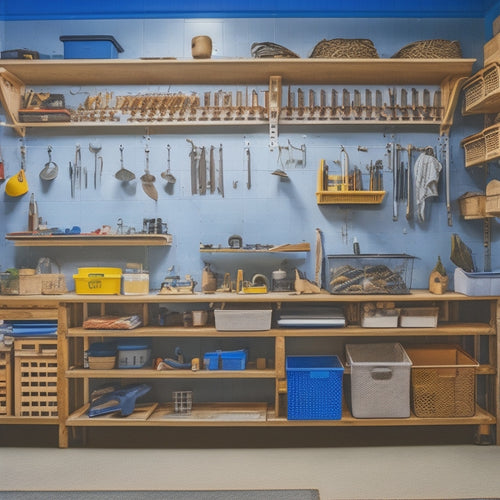
A cluttered workspace can quickly lead to inefficiency and mistakes. As you prepare for your plaster construction renovation project, it is crucial to prioritize tool storage and organization. This will save you time and reduce stress throughout the process.
To achieve ideal toolbox organization, consider the following storage solutions:
| Tool Category | Storage Solution |
|---|---|
| Hand tools | Toolbox with dividers and small compartments |
| Power tools | Dedicated power tool cabinet with cord organizers |
| Fasteners and fixings | Small parts organizer with labeled compartments |
| Measuring and testing tools | Compact storage case with protective padding |
| Cleaning supplies | Portable cleaning caddy with separate sections |
Safety Gear and Precautions
As you set up your organized workspace, you're now ready to focus on the equipment that'll protect you from the unique hazards associated with plaster construction renovation. Safety regulations dictate that you take specific protective measures to minimize risks.
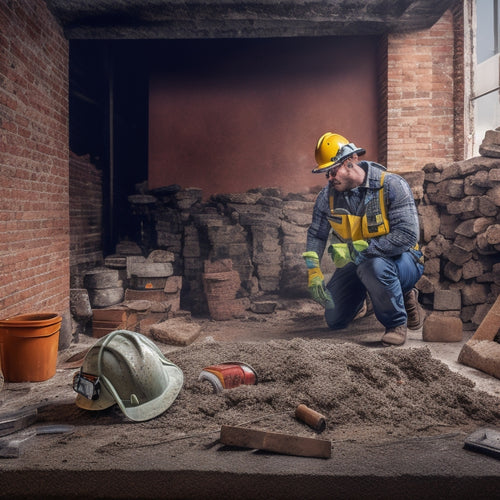
First, invest in a high-quality dust mask or respirator to prevent inhaling dust and debris. Safety glasses or goggles will shield your eyes from flying particles. Wear durable, protective gloves to safeguard your hands from cuts, abrasions, and exposure to harsh chemicals. A hard hat and steel-toed boots will protect your head and feet from falling objects and heavy materials.
Don't forget to implement fall protection measures, such as safety harnesses and guardrails, when working at heights. Guarantee good ventilation in enclosed spaces to prevent the buildup of harmful fumes.
Materials for Plaster Work
Your plaster construction renovation project hinges on using the right materials to achieve a durable, high-quality finish. The type of plaster you choose will greatly impact the outcome, so it's vital to select the best option for your specific needs.
You'll need the following materials for your plaster work:
-
Cement plaster: A mixture of cement, sand, and water, suitable for most interior and exterior applications.
-
Lime plaster: A blend of lime putty, sand, and water, ideal for historic building restorations and high-humidity areas.
-
Gypsum plaster: A fast-setting, cost-effective option for interior applications, such as drywall and ceiling repairs.
-
Sand: An important aggregate in plaster mixes, available in various grades and textures.
-
Retarders and accelerators: Chemical additives that regulate the setting pace of your plaster, ensuring the best workability and finish.
Understanding the characteristics and applications of each material will help you make informed decisions about your project.
Additionally, perfecting various mixing techniques will enable you to achieve the perfect consistency and results for a successful renovation.
Specialized Equipment Needed
With your materials in hand, it's time to turn your attention to the specialized equipment needed to secure a successful plaster construction renovation project.
You'll require a range of tools to efficiently complete tasks like plaster mixing and surface preparation. A plaster mixer or a mixing drill with a paddle attachment is essential for combining plaster and water to the correct consistency. A mixing bucket or a large, clean container is also necessary for this process.
For surface preparation, you'll need a putty knife or trowel for scraping and smoothing surfaces, as well as a wire brush for removing old plaster or debris. A sanding block or power sander will help achieve a smooth finish. Additionally, a hawk or plastering trowel is necessary for holding and applying plaster to the wall or ceiling.
Don't forget a level, straightedge, and string lines to confirm your work is straight and level. Finally, have a clean water source and a hose or spray bottle on hand to maintain the correct moisture levels during the plastering process.
Frequently Asked Questions
Can I Reuse Old Plaster or Do I Need to Replace It Entirely?
When deciding whether to reuse old plaster, you'll need to assess its condition; if damaged beyond repair, you'll need to employ plaster removal techniques, but if salvageable, you can apply plaster repair methods to restore its integrity.
How Do I Match the Original Plaster Color and Texture?
You'll expertly revive the original look by employing plaster color mixing techniques, such as creating a color board or using a spectrophotometer, and texture matching methods like spraying or hand-applied finishes to achieve an identical aesthetic.
What Is the Ideal Temperature for Plaster Application?
You'll want to apply plaster when the temperature is between 50°F and 70°F (10°C and 21°C), ensuring ideal plaster drying; temperature control is essential, as extreme temperatures can lead to uneven curing and compromised structural integrity.
Can I Do Plaster Construction Renovation in a Humid Environment?
As you step into the humid environment, imagine a sponge soaking up water - that's what your plaster will do, unless you control moisture management with specialized plaster additives, ensuring a strong, durable finish that won't crack under pressure.
Do I Need to Obtain Special Permits for Plaster Renovation Work?
You'll need to determine if you require special permits for your plaster renovation work, as local authorities issue different permit types based on renovation regulations, ensuring compliance with building codes and zoning laws.
Conclusion
You've got the blueprint, now it's time to bring your plaster construction renovation to life. With the right tools, materials, and safety gear, you'll be cooking with gas and well on your way to a successful project. Remember, a smooth renovation is all about being prepared for the unexpected, so don't get caught with your pants down - stay organized, plan ahead, and you'll be enjoying your newly plastered space in no time.
Related Posts
-
7 Must-Have Safety Gears for Brick Wall Renovation
When renovating a brick wall, you'll face a multitude of hazards, making it essential to wear and use the right safet...
-
7 Best Plastering Bat Sizes for DIY Renovations
When tackling DIY renovations, you'll want to choose the right plastering bat size to achieve a professional-looking ...
-
7 Best Tool Storage Ideas for Home Renovation
When it comes to home renovation, staying organized is key to maximizing productivity and minimizing wasted time. To ...
