
What You Need for a Successful Plastering Renovation
To achieve a successful plastering renovation, you'll need to assemble an extensive range of tools and materials. Start with essential safety gear like dust masks, safety goggles, and steel-toed boots to prevent injuries. Then, gather plastering hand tools such as trowels, hawks, and floats, as well as power tools like rotary hammers and mixers for efficient work. Additionally, prepare measuring and mixing essentials, surface preparation tools, and finishing and smoothing tools. Don't forget cleaning and protection supplies to minimize damage and cleanup time. Now that you've got the basics covered, it's time to dive deeper into the specifics and fine-tune your approach.
Key Takeaways
- Essential safety gear, including dust masks and hard hats, protects you from hazards during the renovation process.
- A range of hand tools, power tools, and measuring tools ensures efficient and accurate work.
- Proper surface preparation, including cleaning and inspecting walls, is crucial for a successful plastering renovation.
- Removing old plaster requires the right techniques and tools, including mechanical, chemical, and hand demolition methods.
- Finishing and smoothing tools, such as trowels, floats, and sandpaper, are necessary for achieving a professional-looking finish.
Essential Safety Gear List
When tackling a plastering renovation project, you'll be exposed to various hazards, from airborne dust to sharp tools, and it's crucial to protect yourself adequately.
Failure to comply with safety regulations can result in serious injuries, fines, or even legal action. To safeguard your safety, you must wear personal protective equipment (PPE) that meets industry standards.
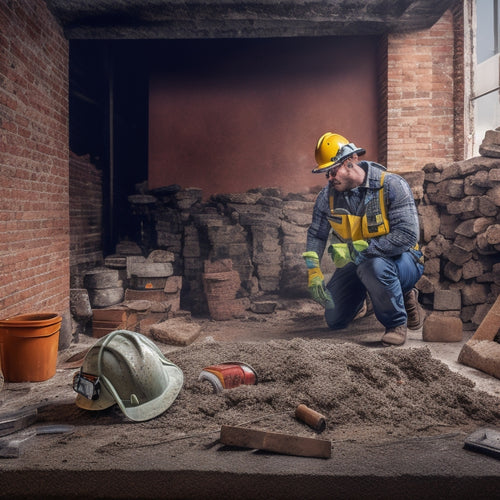
Start with a dust mask or respirator to prevent inhalation of airborne particles. Safety goggles or glasses will protect your eyes from debris and dust. Wear a hard hat to prevent head injuries from falling objects or tools.
Steel-toed boots with good grip will prevent slips and trips. Don't forget to wear cut-resistant gloves to protect your hands from sharp tools and materials. A long-sleeved shirt and trousers will prevent skin exposure to hazardous materials.
Remember to inspect your PPE regularly to verify it's in good condition. Always follow safety regulations and guidelines specific to your region and project.
Plastering Hand Tools Required
What's the right tool for the job? When it comes to plastering, having the right hand tools can make all the difference in achieving professional-looking results.
You'll need a variety of tools to master different plastering techniques, from applying and smoothing to finishing and detailing.
Here are the essential hand tools you'll need:
-
Trowel: A sturdy, well-balanced trowel is necessary for applying and smoothing plaster. Look for one with a comfortable grip and a blade that's the right size for your project.
-
Hawk: A hawk is a flat, handheld tool used to hold and transfer plaster to your trowel. It's vital for efficient plaster application.
-
Float: A float is a long, flat tool used to smooth and flatten freshly applied plaster. It's perfect for creating a uniform surface.
- Putty knife: A putty knife is a versatile tool used for scraping, smoothing, and applying filler. It's also great for detail work and finishing touches.
Remember to prioritize tool maintenance to guarantee your hand tools remain in top condition.
Regularly clean and store your tools properly to extend their lifespan and maintain their performance.
With these essential hand tools and proper care, you'll be well on your way to achieving professional-looking results in your plastering renovation.
Power Tools for Efficient Work
Mastering the art of plastering renovation demands more than just hand tools; it's time to harness the power of efficient machinery to take your work to the next level.
As you advance in your plastering techniques, you'll find that power tools can greatly reduce your workload and improve the overall quality of your projects. A rotary hammer, for instance, is essential for drilling into concrete or brick, while a mixer drill is perfect for blending plaster mixes.
Don't forget a reciprocating saw for demo work or an angle grinder for cutting and shaping plaster profiles.
Proper tool maintenance is vital to guarantee your power tools last long and perform at their best. Regularly clean and lubricate your tools, and store them in a dry, secure place.
You should also check and replace worn-out parts promptly to avoid accidents and downtime.
By combining the right power tools with good tool maintenance, you'll be able to tackle even the most complex plastering projects with confidence and efficiency.
With the right machinery at your disposal, you can focus on refining your plastering techniques and delivering high-quality results that exceed your clients' expectations.
Measuring and Mixing Essentials
You'll need accurate measurement tools, such as digital scales and graduated mixing buckets, to guarantee precise proportions of plaster and water.
A clean mixing environment is also essential, as it prevents contamination and guarantees a consistent mix.
Accurate Measurement Tools
Precision is the backbone of a successful plastering renovation, and it all begins with accurate measurement tools. You can't achieve a smooth, even finish without precise measurements.
That's why investing in high-quality digital measuring tools is vital. These tools allow you to take accurate readings quickly and easily, guaranteeing that your calculations are spot on.
Here are some important measurement tools you'll need:
- Laser level: This tool guarantees that your surfaces are perfectly level, which is fundamental for achieving a professional finish.
- Digital tape measure: This tool provides accurate measurements quickly and easily, saving you time and reducing errors.
- Angle measurer: This tool helps you measure angles accurately, which is essential for creating seamless joints and corners.
- Moisture meter: This tool helps you detect moisture levels in your walls, which is important for preventing water damage and guaranteeing a successful renovation.
Clean Mixing Environment
With accurate measurements in hand, it's time to move on to the next vital step in your plastering renovation: creating a clean mixing environment. This is where you'll combine your carefully measured ingredients, and a well-organized workspace is key for achieving the perfect mix.
Start by clearing your workspace of any debris, dirt, or obstructions that could contaminate your mixture or hinder your mixing techniques. Cover your work surface with a dust-resistant material, such as a plastic sheet or a specialized mixing mat, to prevent plaster from bonding to it.
Next, gather all your mixing tools, including your mixing bucket, trowel, and paddle, and place them within easy reach. A well-organized workspace will help you stay focused and guarantee that you're working efficiently.
Proper Ratio Control
Mix plastering ingredients in the correct proportions to achieve a strong, durable, and long-lasting finish.
You'll need to carefully measure and mix the plaster, sand, and water to achieve the ideal consistency. This ratio control is vital, as it directly affects the final result.
To get it right, follow these guidelines:
-
Start with a clean slate: Begin with a fresh mixing bucket and tools to prevent contamination.
-
Measure accurately: Use a scale or measuring cups to guarantee precise proportions of plaster, sand, and water.
-
Mix in the right order: Add water to the mixing bucket first, followed by plaster, and finally sand.
- Achieve the perfect consistency: Aim for a workable mix that's not too runny or too thick, allowing for smooth application techniques and a uniform finish.
Surface Preparation Tools Needed
You'll need a stiff-bristled brush or a wire scraper to thoroughly clean the walls, removing dirt, grime, and old adhesive.
Next, use a putty knife or a pry bar to remove old plaster, taking care not to gouge the underlying surface.
With the right tools, you'll be able to efficiently strip away the old material and prepare the surface for new plaster.
Clean the Walls
Scrape off old plaster residue, dirt, and grime from the walls using a stiff-bristled brush or a wire scrub brush, working from the top down to prevent debris from spreading to clean areas. This vital step guarantees a strong bond between the new plaster and the wall surface.
Next, you'll need to:
- Vacuum the walls to remove any loose debris and dust.
- Dampen the walls with a mild detergent solution to prevent dust from becoming airborne.
- Use a scraper or putty knife to remove any remaining loose material, taking care not to gouge the wall surface.
- Inspect the walls for signs of moisture issues, such as water stains or peeling paint, and address these issues before proceeding with the renovation.
A clean wall surface is essential for achieving a smooth wall texture in your plastering renovation. By following these steps, you'll be well on your way to a successful renovation.
Remove Old Plaster
With your wall surface clean, it's time to tackle the old plaster itself. Removing old plaster is an essential step in your renovation process, and it requires the right techniques and tools. You'll need to assess the wall condition to determine the best approach for removal.
| Plaster Removal Techniques | Wall Condition Assessment |
|---|---|
| Mechanical removal (scraping, sanding) | Cracked or loose plaster |
| Chemical removal (dissolving) | Water-damaged or stained plaster |
| Hand demolition (hammer and chisel) | Severely damaged or detached plaster |
| Power tool demolition (reciprocating saw) | Thick, multi-layered plaster |
| Steaming | Delicate or ornate plaster details |
When choosing a removal technique, consider the type of plaster, its condition, and the desired outcome. Mechanical removal is often the most efficient, but chemical removal may be necessary for water-damaged areas. Hand demolition is ideal for small, delicate areas, while power tool demolition is best for large, thick plaster sections. Steaming can help preserve ornate details.
Finishing and Smoothing Tools
Precision is key when it comes to finishing and smoothing tools, as a well-executed plastering job relies heavily on the quality of the finish.
You'll need the right tools to achieve a flawless, smooth surface that's free of imperfections.
To master smoothing techniques and add the perfect finishing touches, you'll require the following essential tools:
-
Trowels: A range of trowels in different sizes and shapes will help you apply and smooth out the plaster to a high standard.
-
Floats: These long, flat tools are perfect for smoothing out large areas and removing any excess plaster.
-
Darby: A darby is a long, straightedge tool used to remove minor imperfections and create a perfectly flat surface.
- Sponges and sandpaper: These are used to add the final finishing touches, removing any remaining imperfections and leaving a smooth, even finish.
With these tools at your disposal, you'll be well on your way to achieving a professional-looking finish that will elevate your plastering renovation to the next level.
Cleaning and Protection Supplies
As you complete your plastering renovation, it's vital to have the right cleaning and protection supplies on hand to maintain a safe and efficient workspace.
You'll need a variety of cleaning tools, such as stiff-bristled brushes, scrubbers, and dusting cloths, to effectively remove debris and dust from surfaces. Don't forget to invest in a reliable vacuum cleaner with a HEPA filter to minimize airborne particles.
When it comes to protection methods, you'll want to have a range of supplies to safeguard your walls, floors, and furniture from damage.
Drop cloths, tarps, and plastic sheets are essential for protecting surfaces from plaster spills and stains. Additionally, consider using masking film and painter's tape to create a seal around areas you want to keep clean.
Implementing effective cleaning techniques and protection methods won't only guarantee a successful renovation but also reduce cleanup time and minimize the risk of damage to your property.
Frequently Asked Questions
Can I Plaster Over Existing Drywall or Does It Need to Be Removed?
You can plaster over existing drywall, but make certain it's securely fastened and free of damage; proper drywall preparation is key, and using advanced plastering techniques, such as applying a bonding agent, will guarantee a strong, durable finish.
Is It Necessary to Hire a Professional for a Small Plastering Job?
You're wondering if you can tackle a small plastering job solo, but unless you're familiar with advanced plastering techniques and have mastered DIY tips, it's recommended to hire a pro to guarantee a flawless, long-lasting finish.
How Long Does It Take for Plaster to Fully Dry and Harden?
You think you're done after applying plaster, but don't rush - it takes 2-6 weeks for it to fully dry and harden, depending on drying conditions and plaster types, so patience is key to a successful finish.
Can I Use Plaster in Areas Exposed to High Humidity or Water?
You can use plaster in humid or wet areas, but you'll need to apply moisture-resistant plaster and employ advanced waterproofing techniques, such as epoxy coatings or silane-based treatments, to prevent water damage and guarantee a durable finish.
Are There Any Eco-Friendly or Sustainable Plastering Options Available?
You're looking for eco-friendly plastering options; you'll find natural materials like lime, clay, and earth plasters offering green alternatives, providing sustainable solutions that reduce your project's carbon footprint while maintaining durability and aesthetic appeal.
Conclusion
As you stand back to admire your newly plastered walls, you can't help but think that it was all worth it - the sweat, the toil, the meticulous planning. And it's no coincidence that your success was built on a foundation of preparation, attention to detail, and the right tools for the job. With the essentials in hand, you've created a space that's not only visually stunning but also structurally sound. You've built something to last, and that's the greatest renovation of all.
Related Posts
-
7 Must-Have Safety Gears for Brick Wall Renovation
When renovating a brick wall, you'll face a multitude of hazards, making it essential to wear and use the right safet...
-
Top 5 Plastering Tools for Small Renovation Jobs
For small renovation jobs, you'll want to start with the top 5 crucial plastering tools: a putty knife for applying a...
-
Budget-Friendly Materials for Your Home Renovation Needs
As you initiate your home renovation, you're enthusiastic to find budget-friendly materials that fit your vision with...
