
Top Demo Tools for Beginner Renovators
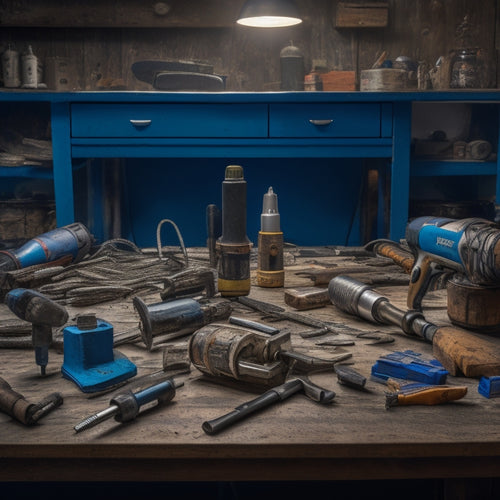
You're about to tackle your first renovation project, and selecting the right demo tools is vital to getting the job done efficiently and safely. As a beginner renovator, you'll need essential power tools like circular saws for cutting wood, metal, and masonry, reciprocating saws for tearing down walls and cutting pipes, and impact drivers for driving large screws and loosening bolts. Don't forget demolition hammers for concrete, rotary hammers for block walls, and oscillating multi-tools for detail-oriented tasks. With the right tools and safety gear, you'll be well on your way to a successful project - and there's more to learn about each of these tools to guarantee your project turns out exactly as you envision.
Key Takeaways
• Begin with essential power tools like circular saws, reciprocating saws, impact drivers, and oscillating multi-tools for efficient demolition.
• Demolition hammers, such as electric, pneumatic, and hydraulic options, are necessary for concrete demolition projects.
• Rotary hammers with correct bit selection are crucial for drilling through block walls and concrete with precision and control.
• Safety gear, including safety glasses, respirator masks, gloves, and durable clothing, is vital for protecting oneself during demo work.
• Mastering proper techniques and tool maintenance, such as blade condition checks, ensures optimal performance and efficiency in demo tasks.
Essential Power Tools for Demo
You'll need a solid arsenal of power tools to tackle demo work efficiently, and a circular saw is often the first tool you'll reach for. This versatile powerhouse is perfect for cutting through wood, metal, and even masonry.
Next, you'll want to add a reciprocating saw to your collection, ideal for demoing walls, floors, and ceilings. Its agility and precision make it a valuable asset in tight spaces.
Handheld breakers are another essential tool in your demo arsenal. These compact beasts are designed to deliver intense force, making quick work of tile, concrete, and brick.
Pneumatic chisels are also a must-have, providing the precision and control you need to tackle delicate demo tasks. With the right attachments, pneumatic chisels can be used to scrape, chisel, and even cut through various materials.
Demolition Hammers for Concrete
As a beginner renovator, you're likely to encounter concrete in your demolition projects. Three types of demolition hammers are specifically designed to tackle concrete, each with its unique features and benefits. You'll want to choose the right one for your concrete removal task.
First, there's the electric demolition hammer, ideal for breaking up small to medium-sized concrete areas. Its lightweight design and high impact energy make it perfect for tight spaces.
Next, the pneumatic demolition hammer is a beast for larger concrete demolition projects. Its air-powered mechanism delivers immense force, making quick work of thick concrete slabs.
Finally, the hydraulic demolition hammer is the most powerful of the three, designed for extreme concrete removal tasks like breaking up thick foundations or concrete pillars.
When selecting a demolition hammer, consider the size and type of concrete you're working with, as well as your personal comfort level with the tool's weight and vibration.
Rotary Hammers for Block Walls
When working with rotary hammers on block walls, you'll need to select the right bit for the job to guarantee efficient drilling and minimize damage to the surrounding material.
You'll also need to be prepared to handle the heavy vibration that comes with using these powerful tools.
Choosing the Right Bit
Choosing the Right Bit
Selecting the correct bit for your rotary hammer is essential when tackling block walls, since the wrong choice can lead to inefficient drilling, bit breakage, or even damage to the surrounding material. You need to take into account the type of bit and material that's best suited for your project.
Here's a breakdown of popular bit types and materials to help you make an informed decision:
| Bit Type | Bit Material | Best For |
|---|---|---|
| Chisel bit | High-carbon steel | Breaking up mortar and concrete |
| Pointed bit | Tungsten carbide | Drilling through concrete and brick |
| Flat bit | Carbide-tipped | Removing old mortar and cleaning surfaces |
| SDS bit | High-speed steel | Drilling into concrete and masonry |
| Core bit | Diamond-coated | Core drilling for pipes and electrical installations |
When choosing a bit, take into account the hardness of the material you're working with, the speed and efficiency you need, and the level of precision required. By selecting the right bit, you'll be able to complete your project efficiently and effectively.
Handling Heavy Vibration
With the right bit in hand, you're ready to tackle block walls, but you'll need to be prepared to handle the heavy vibration that comes with using a rotary hammer. This intense vibration can be physically demanding and even lead to fatigue, so it's essential to develop strategies for managing it.
One effective approach is to employ vibration absorption techniques, such as using anti-vibration gloves or grips that help reduce the impact on your hands and arms.
Additionally, you can try dampening techniques, like holding the hammer with a firm but not overly tight grip, allowing the tool to do the work while you maintain control.
Another key tip is to maintain a comfortable stance, with your feet shoulder-width apart and your body balanced evenly, which will help you absorb the vibration more efficiently.
Impact Drivers for Heavy Duty
When you're tackling heavy-duty demo projects, you need a tool that can keep up.
That's where impact drivers come in - with their powerful motor performance, they'll make short work of even the toughest jobs.
You'll be amazed at how easily they can drive large screws, loosen stubborn bolts, and break down thick materials.
Tough Jobs Made Easy
You'll be amazed at how effortlessly an impact driver can tackle heavy-duty tasks that would otherwise leave you exhausted and frustrated. With the right tool, you'll be able to take on challenging demolition techniques, such as breaking up concrete or driving long screws, without breaking a sweat. Effective project planning is key to a successful renovation, and an impact driver is an essential tool to have in your arsenal.
When faced with tough jobs, an impact driver's high-torque motor and advanced gearbox work together to deliver the power and speed you need to get the job done quickly and efficiently.
Whether you're driving lag screws, removing bolts, or loosening stubborn nuts, an impact driver makes quick work of even the most intimidating tasks. Its versatility and reliability make it an indispensable tool for any serious renovator.
Powerful Motor Performance
An impact driver's powerful motor performance is what sets it apart from other tools, allowing it to tackle heavy-duty tasks that would normally require a lot more time and effort.
When you're dealing with stubborn screws or bolts, you need a tool that can deliver the power you need to get the job done. That's where an impact driver's motor efficiency comes in. Look for a tool with high torque ratings, as this will give you the oomph you need to drive screws and bolts with ease.
Here are some key features to look for in an impact driver's motor performance:
-
High torque ratings: Measured in inch-pounds or foot-pounds, this tells you how much twisting force the tool can apply to drive screws and bolts.
-
Brushless motor technology: This design improves motor efficiency, reducing heat and increasing run-time.
-
Variable speed control: This feature allows you to adjust the speed of the tool to suit the task at hand, giving you more control and precision.
Reciprocating Saws for Demo
For demo projects that require tearing down walls, cutting through pipes, or prying loose stubborn flooring, a reciprocating saw is the go-to tool that gets the job done efficiently. As a beginner renovator, it's crucial to handle this powerful tool with care. Remember to always wear protective gear, including safety glasses, gloves, and a dust mask, to guarantee reciprocating saw safety.
When it comes to saw blade selection, you'll want to choose the right one for the task at hand. Here's a breakdown of popular saw blade options:
| Saw Blade Type | Best For |
|---|---|
| Demo blades | Tearing down walls, cutting through pipes |
| Wood-cutting blades | Cutting through wood, plywood, or MDF |
| Metal-cutting blades | Cutting through metal pipes, conduit, or rebar |
| Specialty blades | Cutting through specific materials, such as drywall or cement board |
Circular Saws for Concrete Cutting
When tackling concrete cutting tasks, a circular saw equipped with a diamond blade is your best bet for making precise cuts in concrete, asphalt, or masonry. This powerful tool is designed to withstand the rigors of cutting through hard materials, making it an essential addition to your demo toolkit.
To get the most out of your circular saw, focus on these key features:
-
High-torque motor: Look for a saw with a robust motor that can handle the demands of concrete cutting.
-
Adjustable blade depth: This feature allows you to customize your cuts and maintain control over the saw.
-
Dust collection system: A built-in dust collection system helps keep your workspace clean and reduces the risk of respiratory hazards.
Mastering concrete cutting techniques with a circular saw requires practice and patience. Start by making shallow cuts and gradually increase the depth as you gain confidence.
Remember to always wear protective gear, including gloves, safety glasses, and a dust mask. With the right techniques and a high-quality circular saw, you'll be making precise cuts like a pro in no time.
Oscillating Multi-Tools for Detail
You'll find that oscillating multi-tools are perfect for tackling detail-oriented tasks that require precision and finesse, like scraping old adhesive or cutting through thin metal. These tools are designed to provide precise control, allowing you to work in tight spaces and make precise cuts.
One of the biggest advantages of oscillating multi-tools is their versatility. With a range of oscillating attachments available, you can switch between tasks quickly and easily. From scraping to grinding, and from cutting to sanding, these tools can handle it all.
The key to mastering oscillating multi-tools is understanding how to choose the right attachment for the job. With practice, you'll become proficient in selecting the perfect attachment for the task at hand. This multi-tool versatility will save you time and effort, allowing you to focus on the finer details of your renovation project.
Whether you're a beginner or an experienced renovator, an oscillating multi-tool is an essential addition to your toolkit. By incorporating one into your workflow, you'll be able to tackle even the most intricate tasks with confidence.
Safety Gear for Demo Work
Wearing the right safety gear is vital to protecting yourself from the hazards and uncertainties of demo work, where flying debris, falling objects, and toxic substances can pose serious threats.
As a beginner renovator, it's important you take safety precautions seriously to avoid injuries and guarantee a successful project.
When it comes to safety gear, you can't afford to compromise. Here are some must-haves to get you started:
-
Safety glasses: Protect your eyes from flying debris and dust with high-quality safety glasses that meet ANSI standards.
-
Respirator mask: Prevent inhalation of toxic substances and airborne contaminants with a reliable respirator mask that fits comfortably.
-
Protective clothing: Wear durable, flame-resistant clothing, including long-sleeved shirts, pants, and gloves to shield your skin from cuts, abrasions, and burns.
Frequently Asked Questions
What Is the Ideal Storage Method for Demo Tools When Not in Use?
When you're not wielding your demo tools, you need a solid storage solution to keep them organized and within reach.
You'll want to invest in a sturdy tool chest or cabinet with dividers to separate your tools by type. Label each compartment to guarantee you can quickly find what you need.
Consider a portable storage option, like a toolbox or bucket, for easy transport to your next project.
Proper tool organization will save you time and frustration in the long run.
How Do I Properly Clean and Maintain My Demo Tools?
You're the master chef of demo day, but your tools are the kitchen utensils that need TLC. Properly cleaning and maintaining your demo tools is essential to their longevity and performance.
Start by wiping down each tool with a soft cloth, removing dirt and debris. Then, apply a rust-inhibiting spray to metal components.
Regularly sharpen cutting edges and lubricate moving parts.
Follow these tool cleaning and maintenance tips to keep your arsenal in top condition, ensuring you're always ready to tackle the next demo project.
Can I Use Demo Tools for Other Tasks Besides Demolition?
You're wondering if your demo tools are limited to demolition tasks only. The good news is, they're not!
Many demo tools have alternative uses, showcasing their tool versatility. For instance, a pry bar can be used for lifting and moving heavy objects, while a reciprocating saw can be used for pruning and cutting through pipes.
You'll be surprised at how often you can repurpose your demo tools for other tasks, making them a valuable addition to your toolkit.
Are There Any Specific Demo Tools Suitable for Left-Handed Users?
As a left-handed renovator, you'll be relieved to know that there are demo tools designed specifically for you.
Look for a left-handed hammer with an ergonomic design that fits comfortably in your hand, reducing fatigue and improving control.
These hammers often have a reversed claw or angled head, allowing for more precise strikes.
You'll appreciate the attention to detail that goes into crafting these tools, making demolition tasks more manageable and efficient.
Can I Rent Demo Tools Instead of Buying Them for a One-Time Project?
As you stand at the threshold of your one-time project, the weight of unnecessary expenses looms like a dark cloud.
But fear not, for you can shatter the financial burden with a clever solution: tool rental.
Compare the costs, and you'll find that renting demo tools can be a cost-effective alternative to buying.
This savvy approach will let you focus on the task at hand, rather than breaking the bank.
Conclusion
You've got the tools, you've got the know-how, and you're ready to take on that renovation project.
With these top demo tools in your arsenal, you'll be tearing down walls, busting up concrete, and making way for the new in no time.
Remember to stay safe, work smart, and don't be afraid to get your hands dirty.
You've got this!
Related Posts
-

5-Step Subfloor Prep Checklist for a Smooth Renovation
You can guarantee a smooth renovation by following a 5-step subfloor prep checklist. First, assess the current subflo...
-

Why Renovation Waste Disposal Harms the Environment
When you undertake a renovation project, you're contributing to a staggering problem: renovation waste disposal, whic...
-
What to Look for in Pneumatic Renovation Tools
When selecting pneumatic renovation tools, you'll want to take into account several key factors to guarantee optimal ...
