
Textured Finish Tool Kit for Home Renovation
When tackling a home renovation project that requires a textured finish, you'll need an extensive tool kit to achieve a professional-looking result. Essential tools include a sturdy trowel, finishing float, hawk, putty knife, and texture mat/stamp for stucco applications. Additionally, textured roller covers, applicator pad options, and patterned finish tools will help you create unique designs and textures. Proper surface preparation, application techniques, and finishing methods are also vital for a successful outcome. By investing in the right tools and understanding the techniques involved, you'll be well on your way to achieving a stunning textured finish - and that's just the starting point for creating a truly exceptional space.
Key Takeaways
- A sturdy trowel, finishing float, hawk, putty knife, and texture mat/stamp are essential tools for a textured finish tool kit.
- Applicator pads and patterned finish tools, such as textured roller covers and stamping mats, help achieve specific textures and designs.
- Surface preparation is crucial, including evaluating surface conditions, applying bonding agents, and cleaning and drying the surface.
- The right tools and techniques are necessary for applying base coat materials, including surface preparation, bonding agent use, and primer application.
- Regular cleaning and maintenance, including gentle cleaning techniques and regular inspections, are necessary to preserve the textured finish.
Stucco Tool Kit Essentials
Precision is key when it comes to achieving a professional-looking stucco finish, and that starts with having the right tools for the job. You'll need a variety of tools to work with different stucco types, from traditional scratch and brown coats to newer synthetic options.
A sturdy trowel is vital for applying and smoothing out the stucco, while a finishing float helps achieve a uniform texture. Don't forget a hawk for holding and carrying the stucco mixture, as well as a putty knife for scraping and cleaning.
When it comes to texture, longevity is essential. You'll want to invest in a high-quality texture mat or stamp to create the desired pattern. These tools will help you achieve a consistent, professional-looking finish that will last for years to come.
Additionally, consider investing in a stucco edger for creating clean lines and a stucco darby for smoothing out the surface. With these vital tools in your kit, you'll be well on your way to achieving a beautiful, long-lasting stucco finish that adds curb appeal and value to your home.
Textured Finish Application Tools
You'll need a range of tools to achieve the desired textured finish, starting with textured roller covers that come in various nap lengths and densities to produce distinct effects.
Next, you'll want to contemplate applicator pad options, which can be used to create specific patterns and textures.
Additionally, you'll require patterned finish tools, such as stamping mats or texture mats, to create more intricate designs.
Textured Roller Covers
When applying a textured finish, choosing the right roller cover is vital, as it directly affects the quality and consistency of the final result.
You'll want to select a roller cover that's designed for your specific finish type, whether it's a knockdown, orange peel, or popcorn texture. The nap length and material of the roller cover will impact the texture's depth and pattern. For example, a longer nap length will produce a more aggressive texture, while a shorter nap length will yield a finer texture.
To achieve the desired finish, you'll need to excel in various roller techniques. Experiment with different roller pressures, speeds, and angles to get the desired effect. For instance, applying more pressure can increase the texture's depth, while using a slower speed can produce a more uniform pattern.
When working with different finish types, it's vital to adjust your roller cover and technique accordingly.
Applicator Pad Options
In conjunction with the right roller cover, applicator pad options play an essential role in achieving a high-quality textured finish. When selecting an applicator pad, you'll want to evaluate the type and material that best suits your project.
There are various applicator pad types, including flat pads, corner pads, and edge pads, each designed for specific areas of your wall or ceiling.
Applicator pad materials also vary, with options like microfiber, foam, and lambswool. Microfiber pads are ideal for water-based materials and provide a smooth finish, while foam pads work well with thicker textures and epoxy-based materials. Lambswool pads are suitable for heavy, knockdown textures and can handle thick, heavy materials.
When choosing an applicator pad, assess the texture you're trying to achieve and the material you're working with. You may need to experiment with different pad types and materials to get the desired result.
Patterned Finish Tools
With the right applicator pad in hand, it's time to focus on the tools that will help you achieve the desired patterned finish.
Patterned finish tools are designed to create unique textures and designs on your walls and ceilings. You'll need a variety of tools to achieve the look you want, including stamping tools, stencils, and texture combs.
Stamping tools come in different shapes and sizes, allowing you to create intricate patterns and designs. They're ideal for creating geometrical patterns, florals, or abstract designs.
Stencils, on the other hand, offer more flexibility, allowing you to create custom designs and patterns. You can use them to add a personal touch to your walls or ceilings.
Texture combs are used to create linear patterns, adding depth and visual interest to your textured finish. They're available in different widths and spacings, giving you control over the final design.
With these tools, you can release your design inspiration and experiment with different patterned techniques to achieve a unique look that reflects your personal style.
Block Stucco Surface Preparation
Your textured finish project begins with a solid foundation: a properly prepared block stucco surface.
You'll need to evaluate the stucco types and surface conditions to determine the best preparation approach. Inspect the stucco for cracks, holes, or damaged areas, and assess its porosity, texture, and color.
For traditional stucco, you may need to apply a bonding agent to guarantee a strong bond between the old stucco and the new textured finish.
If you're working with synthetic stucco, you'll need to clean the surface thoroughly to remove dirt, oil, or other contaminants that might interfere with the textured finish.
Next, you'll need to power wash the surface to remove dirt, grime, or old coatings. This step is essential to creating a smooth, even surface for your textured finish.
Make sure to use the correct pressure washer settings and nozzle type to avoid damaging the stucco.
After power washing, allow the surface to dry completely before proceeding with the next steps.
Applying Base Coat Materials
You'll need to prepare the surface for the base coat by ensuring it's clean, dry, and free of any oil or grease.
Next, you'll apply a bonding agent to the surface, which will help the base coat adhere properly.
Base Coat Preparation
Base coat preparation is a critical step in achieving a durable and long-lasting textured finish. You'll need to verify the surface is properly prepared to receive the base coat materials. This involves cleaning the surface of dirt, oil, and grease, and repairing any cracks or holes.
To achieve the best surface adhesion, you'll need to choose the right base coat type for your project. There are several types to choose from, including epoxy, polyurethane, and acrylic. Each type has its own unique characteristics and benefits, so it's crucial to select the one that best suits your specific needs.
- Clean the surface thoroughly with a degreaser to remove dirt, oil, and grease
- Fill any cracks or holes with a patching compound and sand smooth
- Sand the surface to create a rough texture for better adhesion
- Apply a primer if necessary, to guarantee a strong bond between the surface and base coat
Surface Smoothing Techniques
With the surface properly prepared, it's crucial to apply the base coat materials using various surface smoothing techniques. You'll need to choose the right tool for the job, as different materials require specific techniques.
For instance, when working with drywall, you'll want to use a putty knife to apply joint compound, feathering it out towards the edges to create a seamless finish.
When applying base coat materials to wood, you'll need to use a different approach. A foam brush or roller works well for applying texture to wood, allowing you to achieve a uniform finish.
Regardless of the material, it's important to maintain even pressure and consistent strokes to avoid unevenness.
Proper surface preparation is key to achieving a smooth finish. You've already taken the necessary steps to guarantee your surface is clean, dry, and free of imperfections.
Now, it's time to apply the base coat materials using the smoothing techniques that best suit your project. By doing so, you'll be well on your way to achieving a professional-looking finish that will make your renovation project stand out.
Floating and Finishing Techniques
Three critical components of a textured finish are joint compound, tape, and proper floating and finishing techniques.
You'll need to master these essential skills to achieve a professional-looking finish. Floating techniques involve applying joint compound to the drywall surface, smoothing it out, and feathering it to create a seamless joint.
Finishing styles, on the other hand, refer to the final texture and appearance of the finish.
When it comes to floating and finishing, you'll need to:
- Use the right type of joint compound for your specific project, such as all-purpose or lightweight compound
- Apply the compound in thin, even layers, allowing each layer to dry before applying the next
- Use a putty knife or trowel to smooth out the compound and achieve the desired finish
- Work in small sections, about 4 feet by 4 feet, to maintain even coverage and avoid streaks or marks
Texture Patterns and Designs
Beyond the fundamentals of floating and finishing lies the domain of texture patterns and designs, where you can release your creativity and add unique character to your drywall project. Here, you'll investigate various textured design inspirations to change your walls and ceilings into standout features.
From subtle to bold, you can create intricate patterns, geometric shapes, or organic forms using innovative texture techniques. To achieve professional-looking results, you'll need to master various tools and methods.
You can use specialized combs, trowels, and stamps to create unique textures, or experiment with different materials like stencils, sponges, or even household items. Don't be afraid to mix and match techniques to create a one-of-a-kind design.
Remember, the key to success lies in practice and patience, so don't be discouraged if your first attempts don't turn out as expected. As you experiment with different texture patterns and designs, keep in mind the overall aesthetic you want to accomplish.
Consider the room's purpose, the surrounding decor, and your personal style to guarantee your textured design complements the space. With creativity and practice, you'll reveal endless possibilities for adding visual interest and depth to your drywall project.
Common Mistakes to Avoid
As you immerse yourself in the world of textured finishes, it's essential to recognize that even the most skilled professionals can fall prey to common mistakes that can compromise the entire project.
These mistakes can be costly, time-consuming, and frustrating, ultimately undermining the freedom and satisfaction you desire in your home renovation.
To avoid these pitfalls, be aware of the following common mistakes:
- Insufficient planning: Failing to plan your project thoroughly can lead to unexpected delays, budget overruns, and poor results.
Take the time to research, measure, and visualize your project before you start.
-
Inadequate surface preparation: Preparation errors, such as failing to clean or prime the surface, can cause the textured finish to adhere poorly or unevenly.
-
Incorrect tool selection: Using the wrong tool for the job can lead to subpar results, wasted materials, and unnecessary stress.
-
Inconsistent application: Applying the textured finish unevenly or inconsistently can result in an unprofessional-looking finish that detracts from the overall aesthetic of your renovation.
Cleaning and Maintenance Tips
Now that you've maneuvered the common mistakes to avoid in textured finish projects, it's time to focus on the upkeep of your newly renovated space. Proper cleaning and maintenance are vital to preserving the appearance and longevity of your textured finish.
To guarantee your space remains pristine, establish a maintenance schedule that includes regular cleaning. For textured finishes, it's important to use gentle cleaning techniques to avoid damaging the surface.
Start by dusting the area with a soft-bristled brush or a dusting wand with a microfiber attachment. For more thorough cleaning, mix a mild detergent with warm water, and use a soft, non-abrasive cloth or sponge to wipe down the surface. Avoid using harsh chemicals or abrasive materials, as they can damage the finish.
In addition to regular cleaning, inspect your textured finish regularly for signs of wear or damage. Addressing issues promptly will prevent them from becoming major problems.
Frequently Asked Questions
Can I Use a Textured Finish Tool Kit for Drywall Repair?
You can definitely use a textured finish tool kit for drywall repair, as it's ideal for drywall patching and texture application, allowing you to seamlessly blend the repaired area with the surrounding wall.
Are Textured Finish Tools Compatible With All Stucco Types?
You're concerned that stucco's varying textures might limit tool compatibility, but rest assured, you can excel at various stucco types with the right techniques. Most textured finish tools adapt to different texture techniques, ensuring a seamless finish on your renovation project.
Do I Need to Prime the Surface Before Applying Base Coat?
Before applying the base coat, you'll need to verify proper surface preparation to ascertain ideal paint adhesion; priming the surface helps create a strong bond, reducing the risk of peeling or flaking, and confirming a durable, long-lasting finish.
Can I Use a Single Tool for Multiple Texture Patterns?
You can investigate various texture application techniques with multi-pattern tools, allowing you to switch between styles without switching tools, giving you the freedom to experiment and create unique designs with ease, precision, and versatility.
Will Textured Finish Tools Work With Exterior Insulation Systems?
You'll be a specialist of exterior finishes in no time! When working with exterior insulation systems, you'll find that textured finish tools are a perfect match, offering unparalleled adaptability in application techniques to guarantee a flawless, professional finish.
Conclusion
As you hold the final texture-patterned wall in your hands, it's like grasping a painter's brushstroke - a stroke of genius that brings your home renovation vision to life. The textured finish tool kit, once a jumbled collection of mysterious instruments, has changed into an orchestra of precision, harmony, and beauty. With every stroke, every swirl, and every texture, you've orchestrated a work of art that echoes the rhythm of your dreams.
Related Posts
-
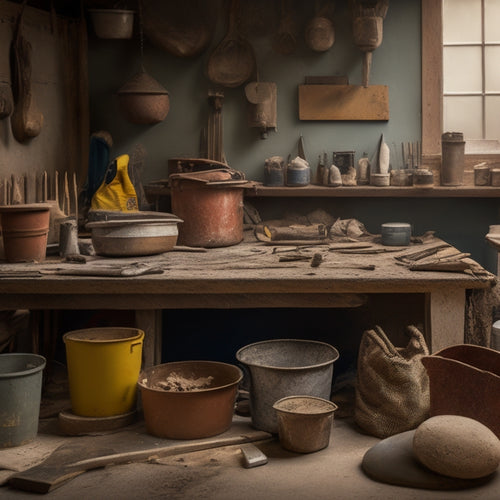
What Plastering Tools Do You Need for Renovation
You'll need a range of specialized tools to tackle a plastering renovation project efficiently and effectively. Essen...
-

What to Inspect When Buying Used Renovation Tools
When buying used renovation tools, you need to scrutinize every detail to avoid costly mistakes. Inspect for rust and...
-
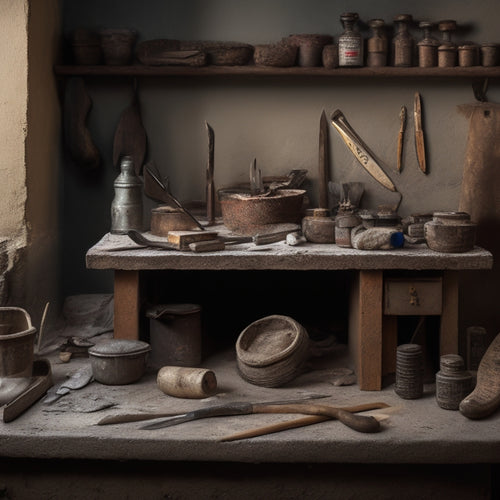
Stucco Tool Kit Checklist for Home Renovation
You'll need a thorough stucco tool kit to guarantee a successful home renovation, as the right tools can make all the...
