
Must-Have Tools for Cement Storage and Renovation
You're investing in the right cement and materials for your renovation project, but without the crucial tools for storage and organization, you're risking project delays, material damage, and even safety hazards. To guarantee a smooth renovation, you must have proper cement mixer storage and maintenance, including a clean storage location, pre-storage checks, and regular maintenance. Additionally, efficient block storage systems, DIY renovation safety equipment, and heavy-duty cart and dolly solutions are must-haves. Moreover, compact storage for hand tools, climate-controlled storage options, and foundation repair tool organization are essential for a successful project. Now, uncover the specific tools and strategies you need to take your renovation to the next level.
Key Takeaways
- Properly store cement mixers in a clean, dry area, with regular maintenance and cleaning to prevent rust and corrosion.
- Use cement bin accessories like scoops, bin liners, and level sensors to efficiently manage and protect cement inventory.
- Organize foundation repair tools into categorized storage systems, with regular cleaning and lubrication to extend tool lifespan.
- Implement an organized worksite layout with optimized tool positioning, task sequencing, and space for movement to enhance productivity and safety.
- Utilize heavy-duty carts and dollies with weight capacity, maneuverability features, and material durability to safely transport heavy materials like cement.
Cement Mixer Storage Essentials
When not in use, your cement mixer requires proper storage to maintain its performance and longevity.
You'll want to select a clean, dry location away from direct sunlight and extreme temperatures. Confirm the mixer is turned off and the power cord is unplugged before storing. Remove any remaining cement and debris from the drum and accessories, and wash them with soap and water. Dry the components thoroughly to prevent rust and corrosion.
Regular cement mixer maintenance is essential to extend its lifespan.
Check and replace worn-out cement mixer accessories, such as the mixing paddle or drum lid, as needed. Lubricate moving parts according to the manufacturer's instructions. Cover the mixer with a waterproof cover or tarp to protect it from the elements.
Foundation Repair Tool Organization
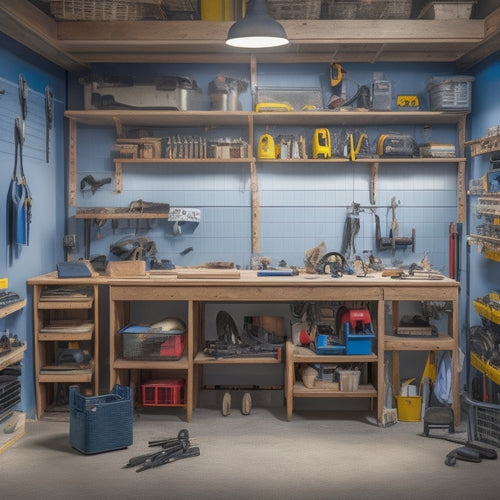
You'll need a well-planned tool storage system to keep your foundation repair tools organized and within reach.
Consider investing in cement bin accessories, such as dividers and labels, to maximize storage capacity and reduce clutter.
Tool Storage Systems
Effective tool storage systems are essential for efficient foundation repair operations, as they enable technicians to quickly locate and access the necessary tools and equipment. This, in turn, saves time and reduces the risk of misplacing critical tools.
As you design your tool storage system, consider the importance of storage space optimization. You want to maximize your storage capacity while minimizing clutter.
To achieve this, start by categorizing your tools and equipment into groups based on their frequency of use and functionality. This will help you prioritize the most essential items and allocate sufficient storage space for them.
Additionally, implement tool maintenance tips, such as regularly cleaning and lubricating your tools, to extend their lifespan and prevent damage.
When selecting storage solutions, opt for durable, rust-resistant containers and shelving units that can withstand the demands of your foundation repair operations.
Label each storage compartment clearly, so you can easily identify where each tool is stored.
Cement Bin Accessories
Organized cement storage is vital to efficient foundation repair operations, and cement bin accessories play an important role in maintaining a well-organized workspace. You need to guarantee that your cement storage is not only organized but also easily accessible to optimize your workflow. Cement bin accessories can help you achieve this by providing a structured system for storing and retrieving cement.
| Accessory | Function | Benefit |
|---|---|---|
| Cement Scoop | Measures and dispenses cement | Efficient loading, reduced waste |
| Bin Liner | Protects cement from moisture, contamination | Easy cleaning, cement bin maintenance |
| Cement Level Sensor | Monitors cement levels | Automated inventory management, reduced stockouts |
| Cement Bin Lock | Secures cement storage | Prevents theft, unauthorized access |
Organized Worksite Layout
As foundation repair operations unfold, a well-planned worksite layout becomes essential to ensuring efficiency and productivity.
You'll want to optimize your layout to minimize travel time between tasks, reduce fatigue, and prevent accidents. This is where worksite ergonomics comes into play. By strategically positioning tools, equipment, and materials, you can create a workflow that's both efficient and safe.
To achieve layout optimization, start by identifying the most frequently used tools and materials. Place these items in easy-to-reach locations to minimize bending, stretching, or walking.
Consider the sequence of tasks and arrange your tools accordingly. For example, if you'll be working on a concrete slab, place your concrete saw near the area where you'll be cutting.
Remember to leave enough space for workers to move around comfortably and maintain a clear line of sight.
A well-organized worksite layout not only enhances productivity but also reduces the risk of accidents and injuries.
Efficient Block Storage Systems
With block storage in high demand, contractors and builders require a system that streamlines their operations.
You need a solution that maximizes storage capacity, reduces labor costs, and minimizes the risk of damage to your blocks. Efficient block storage systems are designed to do just that.
To achieve ideal storage, consider the following strategies:
-
Modular storage solutions: These systems consist of interlocking units that can be easily assembled and reconfigured to accommodate different block sizes and quantities.
-
Block stacking techniques: Implementing proper stacking techniques, such as alternating block orientation and using spacers, can increase storage density and reduce the risk of block damage.
-
Vertical storage: Make the most of your storage space by using vertical storage systems, such as racks or shelving units, to store blocks off the ground and out of the way.
DIY Renovation Safety Equipment
You'll need to prioritize your safety during DIY renovations, and that starts with protecting your eyes and respiratory system.
You'll want to invest in high-quality eye protection gear, such as goggles or safety glasses, to shield your eyes from debris and dust.
Additionally, you'll need dust mask essentials, including respirators or masks with filters, to prevent inhaling harmful particles.
Eye Protection Gear
Protecting your eyes from debris and hazardous materials is critical when undertaking DIY renovation projects, where flying particles, chemical splashes, and other dangers lurk around every corner.
You must prioritize eye protection to avoid serious injuries, including permanent vision loss.
When it comes to eye protection gear, you can't compromise on quality. Verify you're meeting safety standards by choosing protective eyewear that meets ANSI Z87.1 standards.
Here are three essential items to include in your eye protection kit:
-
Safety glasses: These provide protection from impact and chemical splashes. Look for glasses with a durable frame, scratch-resistant lenses, and a comfortable fit.
-
Goggles: These offer additional protection from dust, debris, and chemical vapors. Opt for goggles with anti-fog coatings and good ventilation to prevent misting.
-
Face shields: These provide full-face protection from flying particles, dust, and chemical splashes. Choose a face shield with an anti-fog coating and a comfortable, adjustable fit.
Dust Mask Essentials
Three vital minutes can make all the difference when it comes to preventing respiratory damage from airborne contaminants during DIY renovation projects.
You'll be exposed to a variety of airborne particles, including cement dust, silica, and other hazardous materials. That's why it's important to wear a dust mask that's suitable for the job.
There are several dust mask types to choose from, each designed to filter specific particle sizes and types. For general renovation work, a half-face dust mask with a particulate filter (P100 or FFP3) is a good starting point.
These masks capture 99.97% of particles as small as 0.3 microns. For more specialized tasks, like sanding or cutting concrete, consider a full-face dust mask with an organic vapor filter.
Proper dust mask maintenance is also necessary. Regularly inspect your mask for signs of wear, and replace it if you notice any damage or degradation.
Clean and store your mask according to the manufacturer's instructions to maintain its continued effectiveness.
Heavy-Duty Cart and Dolly Solutions
With heavy bags of cement burdening your workspace, the need for efficient material handling becomes paramount. You can't afford to waste time and energy lugging around heavy loads, which is where heavy-duty cart and dolly solutions come in.
When selecting a heavy-duty cart or dolly, consider the following key factors:
-
Weight capacity: Verify the cart or dolly can handle the weight of your heaviest cement bags or other materials.
-
Maneuverability features: Look for carts or dollies with ergonomic design, swivel casters, and adjustable handles to facilitate smooth transport and reduce strain on your body.
-
Material durability: Choose carts or dollies made from high-quality, durable materials that can withstand the rigors of your workspace and minimize maintenance costs.
Compact Storage for Hand Tools
Across your workspace, hand tools are scattered, awaiting organization and efficient storage. You need a solution that keeps your tools within easy reach while maintaining a clutter-free environment. Compact storage for hand tools is the answer. Invest in compact toolboxes that provide dedicated compartments for each tool, ensuring everything has its designated place.
Look for portable storage options that can be easily carried to different areas of your workspace or job site. These compact storage solutions enable you to categorize your tools by type or frequency of use, streamlining your workflow. Label each compartment to quickly identify the contents, saving you time and frustration.
With compact storage, you can store more tools in a smaller footprint, making the most of your available space. Additionally, many compact toolboxes feature durable construction and weather-resistant materials, protecting your tools from the elements.
Climate-Controlled Storage Options
In proximity to your workspace, sensitive tools and materials require protection from environmental factors that can compromise their performance and longevity.
You need to guarantee that your equipment is shielded from extreme temperatures, humidity, and other climatic conditions that can affect their functionality and lifespan.
To achieve this, consider investing in climate-controlled storage options that provide a stable environment for your tools and materials.
Here are three key considerations:
-
Humidity control: Look for storage solutions that can maintain a consistent humidity level, typically between 30% and 50%, to prevent moisture damage or rust.
-
Temperature regulation: Confirm that your storage option can regulate temperature fluctuations, keeping your tools and materials within a suitable range (usually between 60°F and 80°F) to prevent thermal shock or degradation.
-
Air purification: Consider storage solutions that incorporate air purification systems to remove dust, debris, and other contaminants that can affect tool performance and longevity.
Frequently Asked Questions
What Is the Ideal Temperature for Storing Cement to Prevent Moisture Damage?
When storing cement, you'll want to maintain a consistent temperature between 50°F and 70°F to prevent moisture damage, as temperature fluctuations can compromise cement's integrity, emphasizing the importance of cement moisture control in storage.
How Often Should I Clean and Inspect My Cement Mixer for Optimal Performance?
As a medieval knight would polish their armor, you should regularly clean and inspect your cement mixer to prevent clogs and corrosion, ensuring ideal performance - aim for a weekly scrub and monthly deep clean for peak mixer maintenance and performance tips.
Can I Store Cement Blocks Outside if They're Covered With a Waterproof Tarp?
You can store cement blocks outside if they're covered with a waterproof tarp, but beware that tarp effectiveness depends on wind, rain, and UV exposure, and prolonged outdoor storage may still compromise block quality.
What Are the OSHA Regulations for DIY Renovation Safety Equipment and Protocols?
You must comply with OSHA regulations, ensuring you wear personal protective equipment, such as hard hats and safety glasses, and implement fall protection measures, like safety harnesses and guardrails, to prevent accidents during DIY renovation projects.
How Do I Prevent Rust on Metal Tools in Humid Storage Environments?
To prevent rust on metal tools, you'll want to control humidity levels in storage environments. Apply a rust-inhibiting coating, store tools in airtight containers, and maintain a relative humidity below 60% using desiccants or dehumidifiers.
Conclusion
As you wrap up your cement storage and renovation project, think of your tool arsenal as a finely tuned orchestra, with each instrument playing its essential role in harmony. With these must-have tools, you've conducted a ensemble of efficiency, precision, and safety. Your cement mixer hums like a bass drum, your foundation repair tools chime in with precision, and your block storage system provides the steady beat of organization. Now, strike a chord with confidence, knowing your project is a masterpiece of productivity.
Related Posts
-
Why Home Renovators Need Smart Tool Storage Now
You need a smart tool storage system that streamlines your workflow, reduces clutter, and protects your investments b...
-

7 Must-Have Safety Gears for Brick Wall Renovation
When renovating a brick wall, you'll face a multitude of hazards, making it essential to wear and use the right safet...
-
10 Best Power Tools to Buy for Home Renovation
To tackle your home renovation project efficiently, you'll need the right power tools for the job. A cordless drill f...
