
Essential Tools for Home Renovation Projects Checklist
You'll need a thorough toolkit to tackle a home renovation project efficiently and effectively, and that starts with identifying the essential tools required for the job. Your masonry tools should include a level, tape measure, string lines, hammer, trowel, and jointer, as well as specialized tools like masonry saws and high-quality masonry trowels. Don't forget power tools for demolition and cutting, hand tools, measuring and marking tools, mixing and application tools, and safety equipment. Having the right tools will guarantee your project stays on track, and exploring each of these categories further will help you master every aspect of your home renovation.
Key Takeaways
• A comprehensive toolkit for home renovation projects should include masonry tools, power tools, hand tools, measuring tools, and mixing tools.
• Specialized tools like masonry saws, jointers, and trowels are essential for achieving precise joints and accurate cuts in masonry work.
• Safety equipment like hard hats, safety glasses, and dust masks are crucial for protecting workers from hazards during renovation projects.
• Regular maintenance of tools is necessary to extend their lifespan, prevent rust, and ensure effectiveness and safety.
• A well-organized toolkit with a variety of tools can help improve project efficiency, reduce errors, and enhance overall quality of work.
Detailed Masonry Tool Checklist
What masonry tools will you need to get the job done efficiently and effectively? As you plan your masonry project, it's vital to have the right tools to avoid delays and guarantee quality results.
Start by gathering the basics: a level, tape measure, and string lines for accurate layout and alignment. You'll also need a hammer, trowel, and jointer for mixing and applying mortar. Don't forget a pointing trowel for finishing joints and a brush for cleaning excess mortar.
Proper masonry tool maintenance is key to extend the life of your tools and prevent damage. Regularly clean and store your tools in a dry place to prevent rust and corrosion.
For larger projects, consider investing in a mixer or a wheelbarrow to simplify material transport. Effective masonry project planning involves identifying the necessary tools and materials upfront, making sure you have everything you need to complete the job.
Power Tools for Demolition Work
As you move from the precise layout and alignment of masonry work to the more aggressive task of demolition, you'll need to switch gears and equip yourself with the right power tools to efficiently tear down and remove existing structures. Demolition techniques require a different set of tools that can withstand the rigors of breaking down walls, floors, and other structures.
| Tool | Purpose |
|---|---|
| Reciprocating Saw | Cutting through pipes, walls, and other obstacles |
| Demolition Hammer | Breaking up concrete, tile, and other hard surfaces |
| Rotary Hammer | Drilling into concrete, brick, and block |
| Impact Wrench | Loosening bolts and nuts on heavy machinery |
When choosing power tools for demolition, consider the scale of your project and the type of materials you'll be working with. Regular tool maintenance is essential to guarantee your tools are in top condition and can withstand the demands of demolition work. By having the right power tools and following proper demolition techniques, you'll be able to tackle even the toughest demolition projects with confidence and precision.
Essential Hand Tools for Masonry
When you're working on masonry projects, having the right hand tools is essential for achieving professional-looking results.
You'll need a range of vital tools to tackle tasks like applying mortar, breaking up old brick, and refining details.
In your masonry toolkit, make sure you have trowels, hammers, and chisels that are up to the task.
Trowels for Mortar Work
You'll need a sturdy, high-quality trowel specifically designed for mortar work to guarantee a smooth, even application and a professional finish.
There are various types of trowels available, each suited for different mortar work tasks. For instance, a v-notched trowel is ideal for applying and spreading mortar, while a square-notched trowel is better suited for finishing and smoothing out surfaces. A pointing trowel, on the other hand, is perfect for filling small gaps and joints.
Regardless of the type, it's crucial to maintain your trowel properly to assure peak performance and extend its lifespan. Regularly clean your trowel with soap and water to remove mortar residue, and store it in a dry place to prevent rust.
You should also inspect your trowel regularly for signs of wear and tear, such as rust or damaged edges, and replace it when necessary.
Hammers for Demolition
Select a heavy-duty hammer specifically designed for demolition work to efficiently break up and remove old masonry structures, concrete, or brick.
When choosing a hammer, contemplate the type of demolition techniques you'll be using and the material you'll be working with. For example, a sledgehammer is ideal for breaking up large areas of concrete or brick, while a claw hammer is better suited for more precise demolition work.
There are several hammer types to choose from, each with its own unique characteristics. A ball-peen hammer is great for breaking up small areas of masonry, while a rubber mallet is perfect for gentle demolition work that requires less force. You may also want to contemplate a hammer with a shock-absorbing grip to reduce fatigue and vibration.
When using your hammer, make sure to wear proper safety gear, including gloves, safety glasses, and a dust mask.
It's also essential to follow proper demolition techniques to avoid damaging surrounding structures or injuring yourself.
With the right hammer and techniques, you'll be able to efficiently and safely demolish old masonry structures, making way for your new renovation project.
Chisels for Detailing
For precise removal of excess mortar, old tile adhesive, or other stubborn debris from masonry surfaces, rely on a sturdy set of chisels specifically designed for detailing.
You'll need a variety of chisel types, including flat, round, and pointed chisels, each suited for specific tasks. Flat chisels are ideal for removing large areas of debris, while round chisels are better for curved surfaces. Pointed chisels, on the other hand, are perfect for getting into tight spaces.
To guarantee your chisels remain effective, it's crucial to perform regular chisel maintenance. Clean your chisels after each use to prevent rust and corrosion. Store them in a dry place, away from direct sunlight.
Periodically, apply a rust-inhibiting coating to protect the metal. You should also hone your chisels regularly to maintain their sharpness. A dull chisel isn't only ineffective but also dangerous, as it can slip and cause accidents.
Safety Equipment for Masons
As you take on a home renovation project, don't overlook the importance of masonry safety. Protective gear is vital for masons, as it shields them from the inherent hazards of their craft, including flying debris, heavy materials, and caustic substances.
You'll need a range of protective gear to guarantee your safety on the job site. Start with a good pair of safety glasses or goggles to protect your eyes from dust, debris, and chemical splashes. A dust mask or respirator is also essential for preventing the inhalation of harmful particles and fumes.
Don't forget to invest in a sturdy hard hat to protect your head from falling objects and debris. Steel-toed boots or shoes with good traction are also a must-have for preventing slips and falls.
Finally, consider wearing long sleeves, gloves, and a dust-resistant apron to prevent skin irritation and damage. By wearing the right protective gear, you'll be able to focus on the task at hand, knowing you're protected from the risks associated with masonry work.
Measuring and Marking Tools
You'll need a reliable set of measuring and marking tools to guarantee accuracy and precision in your home renovation project. These tools will help you execute measuring techniques with confidence, ensuring that every cut, drill, and installation is spot on.
A 25-foot tape measure is a must-have for calculating room dimensions, wall lengths, and material quantities. A level will help you achieve perfect vertical and horizontal alignments, while a laser level will project precise lines and planes for more complex tasks.
For marking accuracy, a set of fine-tip markers and a chalk reel will allow you to create clear, visible lines on various surfaces. Don't forget a combination square for ensuring accurate 90-degree angles and a stud finder to locate hidden studs behind walls.
With these measuring and marking tools in your arsenal, you'll be able to tackle any renovation task with confidence, knowing that your measurements are precise and your marks are accurate.
Mixing and Application Tools
When it comes to applying and mixing materials, you'll need the right tools to get the job done efficiently and effectively.
You'll be working with a variety of substances, from adhesives and sealants to paints and coatings, and each requires a specific tool to achieve a professional-looking finish.
In your mixing and application toolkit, you'll want to include trowels and floats, paint brushes and rollers, and caulk and sealant guns to guarantee a successful project outcome.
Trowels and Floats
Select the right trowel and float for your project to guarantee efficient mixing and application of materials, such as concrete, plaster, or adhesive.
You'll need a trowel that can handle the specific demands of your project, whether it's applying a thin layer of adhesive or mixing a thick batch of concrete. There are various trowel types to choose from, including pointed, notched, and square-edged trowels, each suited for specific tasks.
When it comes to float materials, you have options like magnesium, aluminum, and resin. Each material has its own strengths and weaknesses, so it's crucial to select the right one for your project.
Here are three important considerations for choosing the right trowel and float:
-
Material compatibility: Confirm the trowel and float you choose are compatible with the materials you're working with.
-
Project scope: Select a trowel and float that can handle the scale of your project, whether it's a small repair or a large renovation.
-
Personal comfort: Choose a trowel and float that feel comfortable in your hand, reducing fatigue and improving your overall work experience.
Paint Brushes and Rollers
For a smooth and even paint job, you're going to need the right paint brushes and rollers that can handle the specific demands of your project.
You'll want to choose brushes with synthetic or natural fibers, depending on the type of paint you're using. Natural fibers work well with oil-based paints, while synthetic fibers are better suited for water-based paints.
When it comes to rollers, look for ones with the right nap length for your specific project. A longer nap is ideal for textured surfaces, while a shorter nap is better for smooth surfaces.
When it comes to paint preparation techniques, you'll want to make certain you're using the right brush or roller for the job. For example, use a brush to cut in around edges and corners, and a roller to cover large areas.
You'll also want to take into account roller application methods, such as working in sections and using a 'W' or 'M' pattern to guarantee even coverage.
With the right tools and techniques, you'll be able to achieve a professional-looking finish that will make your renovation project shine.
Caulk and Sealant Guns
You'll need to guarantee a watertight seal around joints and seams by using the right caulk and sealant guns, which come in various types and sizes to suit specific application requirements.
With the right tools, you'll be able to apply caulk and sealants efficiently, securing a durable and long-lasting seal.
When it comes to choosing the right caulk and sealant gun, consider the following factors:
-
Caulk type: Different caulk types, such as silicone, acrylic, or polyurethane, require specific guns designed for their unique properties.
-
Sealant application: The size and type of gun you need will depend on the specific sealant application, such as filling gaps, sealing joints, or bonding materials.
-
Pressure and flow control: Look for guns with adjustable pressure and flow control to guarantee a smooth, consistent application.
Trowels and Finishing Tools
Your arsenal of trowels and finishing tools is essential for achieving a professional-looking finish in your home renovation project. You'll need a variety of trowels to accomplish different tasks, such as applying and smoothing out materials like plaster, stucco, and drywall compound.
There are different trowel types to choose from, including v-notched, square-notched, and rounded-edge trowels, each designed for specific finishing techniques. For instance, a v-notched trowel is perfect for applying and spreading thick materials, while a square-notched trowel is better suited for smoothing out surfaces. A rounded-edge trowel, on the other hand, is ideal for creating a smooth, even finish.
You'll also need finishing tools like putty knives, scrapers, and sanding blocks to refine your work. These tools will help you achieve a flawless finish, whether you're working with drywall, plaster, or stucco.
Cutting and Shaping Tools
Precision cutting and shaping are critical steps in home renovation, and having the right tools for the task is essential to achieving professional-looking results.
You'll need to master various cutting techniques and shaping methods to get the job done efficiently.
Here are the must-haves in your cutting and shaping toolkit:
-
Circular saw: A versatile power tool for making straight cuts in wood, metal, and other materials.
-
Jigsaw: Ideal for curved cuts and intricate shapes, this saw is perfect for creating custom designs.
-
Router: A powerful tool for shaping edges, creating profiles, and making decorative cuts.
With these tools, you'll be able to tackle a wide range of cutting and shaping tasks, from framing to trim work.
Remember to always follow safety guidelines and manufacturer instructions when operating power tools.
Cleaning and Maintenance Tools
When you're in the midst of a home renovation, it's crucial to have the right cleaning and maintenance tools to keep your workspace organized and safe.
You'll need to remove dust and debris regularly to avoid damage to new materials and to maintain a healthy working environment.
You should prioritize dust removal essentials and power cleaning solutions to get the job done efficiently.
Dust Removal Essentials
You'll need a reliable dust removal system to contain the chaos and prevent airborne particles from spreading throughout the site, compromising air quality and settling on freshly finished surfaces. This is vital for maintaining a safe and healthy working environment, as well as protecting your newly renovated spaces from damage.
Here are the essential tools you'll need for effective dust removal:
-
Dust masks: These will protect you and your team from inhaling hazardous particles, ensuring you can breathe easily and work safely.
-
Vacuum systems: A powerful vacuum system will help contain dust and debris, preventing it from spreading throughout the site. Look for one with a HEPA filter to capture 99.97% of particles as small as 0.3 microns.
-
Dust containment barriers: These will help isolate the work area, preventing dust and debris from escaping and contaminating other parts of the site.
Power Cleaning Solutions
To tackle tough cleaning jobs and maintain a safe, healthy work environment, turn to power cleaning solutions that can blast away dirt, grime, and debris.
You'll need a reliable pressure washer to tackle exterior surfaces like sidewalks, driveways, and siding. Look for a model with adjustable pressure settings and a variety of nozzles to tackle different tasks. Don't forget to pair it with eco-friendly cleaners that are gentle on surfaces and the environment.
For interior cleaning, consider a wet/dry vacuum with a powerful suction capacity to pick up heavy debris and liquids. A cordless option will give you the freedom to move around easily.
Additionally, a steam cleaner can be a game-changer for tackling tough stains and grout. Its high-temperature steam can sanitize surfaces without harsh chemicals.
With these power cleaning solutions in your arsenal, you'll be able to tackle even the toughest cleaning jobs with ease and confidence.
Specialized Masonry Tools Needed
Masonry projects demand specific tools to guarantee accurate cuts, precise joints, and a professional finish, so having the right specialized masonry tools on hand is essential.
You can't afford to compromise on quality, as it directly impacts the structural integrity and aesthetic appeal of your renovation project.
Stay ahead of the curve by incorporating the latest masonry tool innovations that prioritize eco-friendly materials and sustainable practices.
Here are three must-have specialized masonry tools for your next project:
-
Masonry trowels: Invest in a high-quality, rust-resistant trowel that can handle heavy use and provides a smooth, even finish.
-
Jointers and grouters: A good jointer and grouter combo will help you achieve precise joints and clean, uniform grout lines.
-
Masonry saws: A diamond-blade masonry saw is a game-changer for making accurate cuts in brick, block, and stone.
Frequently Asked Questions
What Is the Best Way to Store My Masonry Tools When Not in Use?
When you're not using your masonry tools, you'll want to store them properly to maintain their condition. Implement a masonry tool organization system, keeping them clean, dry, and protected from rust, and follow tool maintenance tips to guarantee they're always ready for your next project.
Can I Rent Masonry Tools Instead of Buying Them Outright?
"When in doubt, rent it out!" Consider a cost comparison: renting masonry tools can be more cost-effective than buying outright, especially for infrequent use. You'll enjoy rental benefits like reduced upfront costs and storage hassles, freeing you to focus on your project.
How Often Should I Replace My Masonry Tools for Optimal Performance?
You should replace your masonry tools every 2-3 years or when you notice performance decline, consider masonry tool maintenance and upgrades to guarantee peak results, and don't hesitate to rent or buy new tools for maximum freedom.
Are There Any Specific Masonry Tools Required for Different Types of Projects?
As you begin on diverse masonry projects, you'll find that specific tool types are essential for best results, such as trowels for smooth finishes, jointers for precise joints, and grinders for robust cuts, each tailored to unique project techniques.
Can I Use Masonry Tools for Other Types of DIY Projects Beyond Masonry?
You'll find that many masonry tools have cross-disciplinary applications, making them multi-purpose tools for various DIY projects. You can repurpose trowels for applying adhesives, and hammers for tapping pieces into place, giving you more bang for your buck.
Conclusion
You've got the blueprint, the vision, and the will - now arm yourself with the right arsenal of tools to bring your home renovation project to life!
With this extensive checklist, you'll be chiseling your way to success in no time.
From demolition to finishing touches, you'll be equipped to tackle any masonry task that comes your way.
So, gear up and get ready to build something truly remarkable!
Related Posts
-
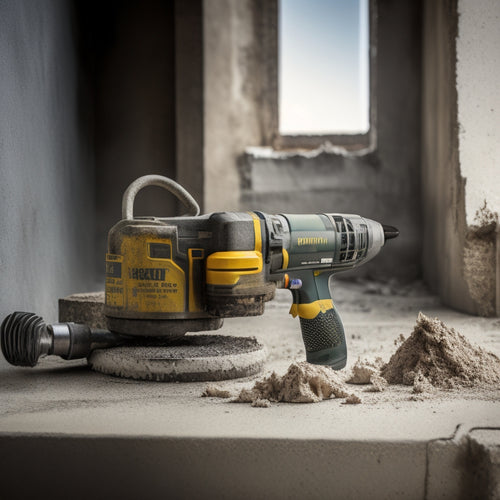
Top Drill for Concrete Wall Renovation
When choosing the top drill for your concrete wall renovation, you'll want to prioritize key features like drill powe...
-

Streamlining Your Exterior Renovation Timeline
To streamline your exterior renovation timeline, start by identifying your project goals and objectives, and prioriti...
-

Why Exterior Wall Renovation Requires a Plan
You're about to commence a complex and potentially costly project when you decide to renovate your exterior walls, an...
