
DIY Renovation Tool Storage Essentials
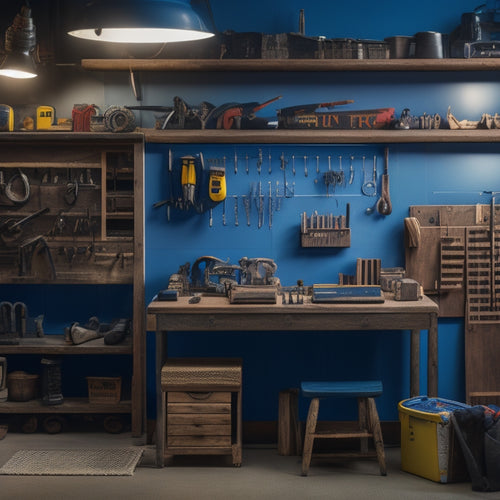
You'll need a strategic tool storage system to maximize efficiency in your DIY renovation project. Start by prioritizing tool accessibility, allocating prime space for frequently used tools, and grouping similar tools together. Conduct a thorough tool inventory to categorize items into hand tools, fasteners, and adhesives. Invest in essential storage containers like large, wheeled toolboxes and smaller, portable ones with dividers. Consider materials, labels, and features like rust-resistant coatings and secure latches. By optimizing your tool storage layout and organization, you'll reduce downtime and enhance productivity - and that's just the beginning of creating a well-oiled workspace.
Key Takeaways
- Prioritize tool accessibility by allocating prime storage space for frequently used tools to enhance efficiency in the workspace.
- Group similar tools together to streamline workflow, reduce clutter, and conduct a thorough tool inventory for efficient storage.
- Use storage labels to identify tool locations for easy access, and consider materials like metal or plastic for toolboxes based on durability and corrosion resistance.
- Maximize wall space for storage with tall shelving units, pegboards, or wall-mounted tool holders to keep frequently used items accessible.
- Ensure power tool safety and maintenance by storing them away from moisture and extreme temperatures, and cleaning them before storage to avoid debris and contaminants.
Optimal Tool Storage Layout
Designing an ideal tool storage layout is crucial to maximizing your DIY renovation workspace's efficiency. When planning your layout, prioritize tool accessibility to reduce wasted time searching for tools and increase productivity. Consider the tools you use most frequently and allocate prime storage space for them.
Next, assess your workspace's dimensions and identify areas where you can optimize space. Make the most of vertical space by incorporating tall shelving units or pegboards. Reserve lower shelves for heavier or bulkier items, keeping them easily accessible. Label each storage compartment to maintain organization and facilitate tool retrieval.
To further optimize space, group similar tools together, such as all drilling equipment or hand tools. This will streamline your workflow and reduce clutter.
Essential Storage Containers Needed
With your ideal tool storage layout in place, it's time to focus on the containers that will hold your tools. You'll need a mix of toolbox types to accommodate different tool sizes and types. Start with a large, wheeled toolbox for bulky items like power saws and drills.
Add smaller, portable toolboxes for hand tools and accessories. Reflect on a toolbox with dividers or compartments to keep similar tools organized.
When selecting containers, think about the materials they're made of. Metal toolboxes are durable and can withstand heavy use, but may be prone to rust. Plastic toolboxes are lightweight and resistant to corrosion, but may not be as sturdy.
Look for containers with features like rust-resistant coatings, reinforced handles, and secure latches. You may also want to reflect on stackable containers or ones with removable trays to maximize storage space.
Maximizing Brick Wall Space
You'll want to make the most of your brick wall space by installing shelves specifically designed for this type of surface.
These brick wall shelves will provide a sturdy and customizable storage solution for your tools and equipment.
Additionally, consider wall-mounted tool holders that can be securely attached to the brick wall, keeping frequently used items within easy reach.
Brick Wall Shelves
Maximizing brick wall space is a clever way to declutter your workshop or garage, and brick wall shelves offer a sturdy and space-saving solution. By installing shelves on your brick wall, you can create additional storage for your tools and equipment, keeping them organized and within reach.
When building brick wall shelves, you'll need to choose the right materials to guarantee they can support the weight of your tools. Consider the following factors to achieve ideal shelf weight distribution:
-
Material selection: Choose brick shelf materials that are durable and can support heavy loads, such as thick plywood or metal brackets.
-
Shelf design: Design your shelves with a sturdy frame and a flat surface to prevent tools from rolling off or falling.
-
Support system: Install a reliable support system, such as L-brackets or wall anchors, to secure your shelves to the brick wall.
- Load capacity: Calculate the maximum load capacity of your shelves and avoid overloading them to prevent collapse or damage.
Wall-Mounted Tool Holders
Your DIY renovation arsenal deserves a strategic storage solution, and wall-mounted tool holders effectively capitalize on brick wall space. By installing these holders, you'll keep your tools organized, within reach, and make the most of your brick wall's real estate.
Magnetic strips and pegboard panels are two popular options for wall-mounted tool holders. Here's a comparison of these two solutions:
| Feature | Magnetic Strips | Pegboard Panels |
|---|---|---|
| Tool Compatibility | Limited to ferrous tools | Compatible with various tool types |
| Installation | Easy, no drilling required | Requires drilling and mounting |
| Customization | Limited | Highly customizable with hooks and bins |
Magnetic strips are ideal for small, ferrous tools like wrenches and pliers, while pegboard panels offer more versatility and customization options. Consider your specific tool set and renovation needs when choosing between these two solutions. By selecting the right wall-mounted tool holder, you'll optimize your brick wall space and streamline your DIY renovation process.
Concrete Wall Anchoring Methods
When anchoring tools to concrete walls, you'll need to select the right drill bit for the job, as the wrong one can compromise the anchor's hold.
You'll also need to choose from various anchor types, such as sleeve, toggle, and wedge anchors, each with its own strengths and weaknesses.
Drill Bit Selection
Frequently, drill bits are overlooked as a vital component of a successful concrete wall anchoring project, yet they play an essential part in ensuring a secure and reliable hold.
You must select the right drill bit type for your concrete wall anchoring project to achieve ideal results. There are various drill bit types, including twist bits, masonry bits, and carbide-tipped bits, each suited for specific applications.
When choosing a drill bit, consider the following factors:
- The type of concrete you're working with (e.g., lightweight, regular, or reinforced)
- The anchor type you're using (e.g., sleeve, expansion, or chemical)
- The drilling depth and diameter required
- The drill bit's material and coating (e.g., tungsten carbide, diamond-coated)
Proper drill bit maintenance is also essential. Regularly inspect your drill bits for signs of wear, and replace them when necessary.
Clean and store your drill bits properly to extend their lifespan and maintain their performance.
Anchor Type Comparison
Selecting the right anchor type is crucial to the success of your concrete wall anchoring project, as it directly impacts the reliability and security of the hold. You'll want to evaluate factors such as the weight and type of material being anchored, as well as the condition of the concrete.
When it comes to concrete wall anchoring, you have three primary anchor types to choose from: expansion anchors, toggle bolts, and screw anchors. Here's a breakdown of each:
| Anchor Type | Installation Method | Holding Power |
|---|---|---|
| Expansion Anchors | Drill hole, insert anchor, and tighten | High holding power, ideal for heavy loads |
| Toggle Bolts | Drill hole, insert bolt, and tighten | High holding power, suitable for medium to heavy loads |
| Screw Anchors | Drill hole, screw in anchor | Lower holding power, suitable for light to medium loads |
As you can see, each anchor type has its own unique characteristics and uses. By understanding the strengths and weaknesses of each, you can make an informed decision about which type to use for your project.
Load Capacity Ratings
You've chosen your anchor type, now it's time to evaluate the load capacity ratings for your concrete wall anchoring project. Load capacity ratings are vital in determining the maximum weight your anchors can hold, guaranteeing safety and preventing accidents.
When selecting anchors, consider the weight of the items you'll be hanging, including the storage unit itself, and add a safety margin.
To make certain you're choosing the right anchor for your project, consider the following factors that affect load capacity ratings:
- The type of concrete you're working with (e.g., regular, hollow, or insulated)
- The anchor's material and design (e.g., plastic, metal, or sleeve anchors)
- The anchor's installation method (e.g., pre-drilled or self-drilling)
- The environmental conditions the anchor will be exposed to (e.g., temperature, humidity, or exposure to chemicals)
Tool Organization Systems
Efficiency is the lifeblood of any DIY renovation project, and a well-designed tool organization system is its unsung hero. A well-organized system helps you quickly locate tools, reducing downtime and increasing productivity.
To create an effective system, start by taking a thorough tool inventory. This involves making a list of all your tools, including their type, size, and frequency of use.
Next, categorize your tools into groups, such as hand tools, fasteners, and adhesives. This grouping will help you decide on the ideal storage layout. Use storage labels to identify where each tool is stored, ensuring that you can easily find what you need when you need it.
Consider using a modular storage system, which allows you to customize your storage layout as your tool inventory changes. With a well-designed tool organization system, you'll be able to find the right tool in seconds, keeping your project on track and ensuring a successful renovation.
Efficient Storage for Power Tools
Having amassed a collection of power tools, you're now faced with the challenge of storing them safely and efficiently. Proper storage is vital for power tool safety and maintenance. A cluttered workspace can lead to accidents, and neglected tools can deteriorate quickly.
To guarantee your power tools remain in top condition, follow these essential storage tips:
-
Keep tools away from moisture and extreme temperatures to prevent damage.
-
Store tools in a well-ventilated area to prevent the buildup of fumes from batteries or fuels.
-
Clean tools before storing them to prevent the spread of debris and contaminants.
- Label and categorize tools to facilitate easy access and reduce clutter.
Frequently Asked Questions
How Can I Prevent Rust on Metal Tools in Storage?
To prevent rust on metal tools in storage, you'll want to apply rust-resistant coatings, such as silicone or wax, and store them in a dry, well-ventilated area, away from direct sunlight and moisture.
Are DIY Tool Storage Solutions Cost-Effective?
"Measure twice, cut once" rings true when considering DIY tool storage solutions, as you'll find they're often cost-effective and budget friendly options. By thinking creatively about storage, you'll uncover that repurposed materials and clever arrangements can save you money without sacrificing functionality.
Can I Use Reclaimed Wood for Tool Storage Shelves?
You can use reclaimed wood for tool storage shelves, leveraging its benefits like unique character and eco-friendliness. However, you'll need to guarantee the wood is properly treated and dried to maintain shelf durability, as it may be more prone to warping or cracking than new lumber.
How Do I Organize Tools for Easy Accessibility?
You'll optimize tool organization strategies by categorizing tools by function, then assigning a designated spot within your storage layout; use dividers, bins, and labels to create a logical flow, ensuring easy accessibility and reducing workflow disruptions.
Can I Store Tools in a Humid or Damp Environment?
You shouldn't store tools in humid or damp environments, as moisture accelerates tool corrosion; instead, you'll want to implement humidity control measures, such as dehumidifiers or silica gel packets, to maintain a dry atmosphere and protect your tools from damage.
Conclusion
As you put the final touches on your DIY renovation tool storage, remember that a well-organized workspace is like a well-oiled machine - it hums along efficiently, producing outstanding results. Just as a skilled mechanic knows exactly where to find each tool, you'll be able to tackle projects with ease, wasting no time searching for misplaced essentials. With these storage essentials in place, you'll be ready to tackle even the most ambitious projects, and your workspace will be the envy of every DIY enthusiast.
Related Posts
-

Why Use Concrete Blocks in Home Renovation
You're considering using concrete blocks in your home renovation, and for good reason: they offer a unique combinatio...
-
7 Smart Tool Organization Tips for Small Renovations
As you tackle your small renovation, you're likely wasting precious time searching for misplaced tools. To enhance ef...
-

Stucco Patching Material Checklist for Home Renovation
You'll need a range of essential tools, including a putty knife, wire brush, hawk or flat trowel, level, and straight...
