
DIY Plastering Timeline for a Smooth Renovation Process
You'll need a structured DIY plastering timeline to guarantee a smooth renovation process. Start by preparing for plastering work, gathering essential tools, wearing protective gear, and conducting thorough surface cleaning and moisture assessment. Next, apply the base coat plaster, mixing it correctly and using the right tools, before installing mesh and fibers for durability. After that, apply the second coat, followed by finishing and smoothing processes. Allow the plaster to cure and dry, then conduct a final inspection and address any touch-ups. By following this timeline, you'll be well on your way to achieving a professional-looking finish, and understanding the subtleties of each step will take your project to the next level.
Key Takeaways
- Prepare the surface by cleaning, assessing moisture, and addressing damp areas to ensure a strong bond between the plaster and wall.
- Apply a base coat of plaster, mixing according to the manufacturer's instructions, and maintain a consistent thickness of about 1/8 inch.
- Install mesh and fibers for added durability, and apply a second coat of plaster after scraping excess material from the first coat.
- Finish with a thinner layer of plaster, smoothing out imperfections with a damp sponge or trowel, and make color adjustments as needed.
- Allow the plaster to cure, keeping the surface misted with water for the first 24 hours, and conduct a thorough inspection post-curing to identify touch-ups.
Preparing for Plastering Work
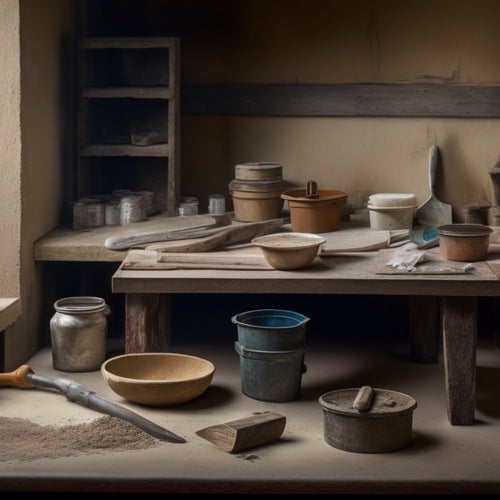
Before diving into the plastering process, make sure you're adequately prepared by gathering essential tools and materials. This includes a mixing bucket, trowel, hawk, and ladder, as well as plaster mix, sand, and water.
Don't forget to wear protective gear like gloves, goggles, and a dust mask to guarantee your safety.
Next, conduct a thorough surface cleaning to remove dirt, grime, and old adhesives. This will assure a strong bond between the plaster and the wall. Use a wire brush or scraper to remove loose debris, and then sweep or vacuum the area clean.
For more stubborn stains, consider using a chemical cleaner or degreaser.
It's also vital to perform a moisture assessment to identify any damp areas that may affect the plaster's adhesion or longevity. Check for signs of water damage, condensation, or high humidity, and address these issues before proceeding.
Applying Base Coat Plaster
As you stand ready to apply the base coat plaster, verify you've mixed the plaster to the manufacturer's instructions, considering the temperature and humidity of your workspace.
Confirm you're using the correct plaster type for your project, whether it's a lime-based, gypsum-based, or cement-based plaster.
Next, gather your application tools, including a hawk, trowel, and scratching tool.
Load the hawk with the mixed plaster, holding it at a 45-degree angle to prevent the plaster from dripping off.
Hold the trowel at a 20-degree angle and scoop up a small amount of plaster, spreading it evenly onto the wall in a continuous motion.
Apply the plaster in sections, about 2 feet by 2 feet, working from the top down to prevent drips.
Use long, smooth strokes to cover the entire area, maintaining a consistent thickness of about 1/8 inch.
As you apply the base coat, keep the trowel clean and free of excess plaster to prevent it from drying on the tool.
Use the scratching tool to remove any excess plaster and create a rough surface for the next coat.
Installing Mesh and Fibers
With the base coat plaster applied, you'll now embed mesh and fibers into the wet plaster to provide additional strength and reinforcement to your DIY plastering project. This vital step guarantees your final finish is durable and resistant to cracks.
Mesh types vary, but for DIY plastering, you'll typically use alkali-resistant glass fiber mesh or fiberglass mesh. These mesh types are designed to withstand the high pH levels in plaster, preventing corrosion and guaranteeing a strong bond.
Cut the mesh to size, overlapping each piece by 2-3 inches to guarantee complete coverage. Press the mesh firmly into the wet plaster, using a putty knife or trowel to remove any air pockets.
Fiber benefits are diverse, including increased tensile strength, improved durability, and reduced shrinkage. Fibers also help to prevent cracking by absorbing stress and distributing it evenly throughout the plaster.
You can add fibers to the mix before applying the base coat or use a fiber-reinforced plaster mix. Regardless of the method, the result is a more sturdy and long-lasting plaster finish.
Second Coat Plaster Application
You'll need to prepare the surface for the second coat by scraping off any excess material from the first coat and misting the area with water to create a bond between the two layers.
Next, you'll apply the second coat, using a trowel to spread it evenly and achieve a smooth finish.
As you work, focus on achieving a consistent thickness and feathering the edges to guarantee a seamless blend with the surrounding area.
Second Coat Preparation
While the first coat is still damp, begin preparing for the second coat by inspecting the surface for any imperfections or defects that may have arisen during the initial application.
Check for unevenness, scratches, or areas where the plaster may have pulled away from the wall. Make a mental note of these areas, as you'll need to address them before applying the second coat.
Next, use your plastering tools to scrape off any excess or loose plaster from the surface. This will guarantee a smooth, even application of the second coat.
After scraping, use a damp cloth to wipe down the surface, removing any dust or debris. This surface cleaning is vital, as it will help the second coat adhere properly to the wall.
Once the surface is clean and free of imperfections, you're ready to apply the second coat.
Remember to work in small sections, using a level to guarantee the surface remains even. With the right preparation, you'll be able to achieve a smooth, professional-looking finish.
Finishing Touches Application
Apply the second coat of plaster, spreading it evenly across the prepared surface. This coat should be thinner than the first, about 1/8 inch thick. Use a putty knife or trowel to spread the plaster, working in small sections to maintain even coverage.
Hold the tool at a 20- to 30-degree angle to achieve the desired texture. For a smooth finish, use long, sweeping strokes, feathering the edges as you go. For a more textured look, experiment with different texture techniques, such as stippling or swirling.
Once you've covered the entire surface, allow the plaster to set, following the manufacturer's instructions. Then, use a damp sponge or trowel to gently smooth out any imperfections or bubbles.
This is also the time to make any necessary color adjustments, as the second coat will be more prominent than the first. Consider your color choices carefully, as they'll greatly impact the final appearance of your plastered surface.
With the second coat applied, you're one step closer to achieving a beautifully finished surface.
Finishing and Smoothing Process
Across the freshly applied layer of plaster, a series of finishing and smoothing techniques await to convert the rough, porous surface into a smooth, even finish. You'll need to employ various plastering tools and techniques to achieve the desired result.
| Smoothing Techniques | Plastering Tools | Description |
|---|---|---|
| Troweling | Hawk and Trowel | Apply pressure to remove excess plaster and smooth out the surface. |
| Floating | Float and Edger | Use a float to remove imperfections and an edger to create a clean edge. |
| Polishing | Polishing Trowel | Apply gentle pressure to remove minor imperfections and create a high-gloss finish. |
| Scraping | Scraping Tool | Remove excess plaster and smooth out the surface with a scraping tool. |
| Sanding | Sandpaper | Use progressively finer grit sandpaper to achieve a smooth finish. |
As you work through these techniques, remember to maintain a clean and organized workspace, and avoid overworking the plaster. By following this process, you'll be able to achieve a smooth, even finish that's ready for painting or further decoration.
Curing and Drying Timeline
You've successfully smoothed out the plaster surface, and now it's time to focus on the curing and drying process. This essential step guarantees your plastering job lasts for years to come.
The curing process involves controlling the environment to facilitate proper hydration of the plaster, while drying refers to the evaporation of excess moisture.
Curing methods vary, but the most common include:
- Keeping the surface misted with water for the first 24 hours
- Applying a curing compound to prevent moisture loss
- Covering the area with a damp cloth or plastic sheeting
Proper curing and drying are vital, as they directly impact the final product's strength, durability, and appearance.
Drying factors, such as temperature, humidity, and air circulation, also play a significant role. Maintaining a consistent environment and monitoring these factors will help you achieve a smooth, even finish.
Final Inspection and Touch-ups
With the curing and drying process complete, it is vital to conduct a thorough final inspection to identify any imperfections or areas that require touch-ups. This step guarantees that your plastering work meets the desired quality standards. Create a final checklist to guide your inspection, covering aspects such as:
| Area to Inspect | Defects to Look For |
|---|---|
| Walls and Ceilings | Cracks, unevenness, or pitting |
| Corners and Edges | Chipped or rough surfaces |
| Joints and Seams | Gaps, cracks, or unevenness |
During the inspection, take note of any imperfections and prioritize touch-ups accordingly. Addressing these issues now will save you time and effort in the long run. Remember, a thorough final inspection is necessary to achieving a smooth, professional-looking finish. Don't compromise on quality – take the time to get it right.
Frequently Asked Questions
Can I Plaster Over Existing Paint or Wallpaper?
You can't simply plaster over existing paint or wallpaper; instead, you'll need to employ proper plaster preparation techniques, such as scraping off loose paint or using wallpaper removal methods like steaming or chemical stripping.
How Do I Handle Electrical Outlets and Switches During Plastering?
When plastering, you'll need to prioritize outlet preparation by removing outlet covers and protecting switches with masking tape or plastic bags to prevent plaster from seeping behind them, ensuring a smooth finish and safe electrical function.
Is It Necessary to Wear Protective Gear During the Process?
Like a warrior preparing for battle, you'll need to armor up with protective clothing and safety goggles to shield yourself from plaster's messy fallout, ensuring you emerge from the renovation fray unscathed and victorious.
Can I Use Plaster for Exterior Wall Renovation Projects?
You can use specific plaster types, like weather-resistant or fiber-reinforced plaster, for exterior wall renovation projects, which offer benefits like improved durability, water resistance, and reduced maintenance, making them ideal for exterior applications.
Are There Any Specific Cleaning Products for Plastering Tools?
Your plastering tools are crying out for TLC! You'll find specialized cleaning products, like trisodium phosphate or wire brush cleaners, designed for effective tool maintenance and ideal cleaning techniques to keep your gear in top shape.
Conclusion
With your DIY plastering project now complete, you've maneuvered a complex process like a skilled conductor leading an orchestra. Your walls, once a rough canvas, now shine like a polished masterpiece. Remember, a smooth renovation process requires patience and attention to detail. By following this DIY plastering timeline, you've guaranteed a strong foundation for your walls, and with proper curing and drying, they'll be ready for finishing touches in no time.
Related Posts
-

Streamlining Your Exterior Renovation Timeline
To streamline your exterior renovation timeline, start by identifying your project goals and objectives, and prioriti...
-
Top 5 Plastering Tools for Small Renovation Jobs
For small renovation jobs, you'll want to start with the top 5 crucial plastering tools: a putty knife for applying a...
-

Streamline Your Exterior Renovation Timeline
To streamline your exterior renovation timeline, you'll need to approach the process strategically. Start by planning...
