
10-Step Home Renovation Project Timeline Checklist
You're about to commence on a detailed 10-step home renovation project, and having a thorough timeline checklist is essential to guarantee a smooth, stress-free experience from start to finish. Start by setting realistic renovation goals, prioritizing features, and establishing a clear direction. Next, plan your budget, allocating funds for materials, labor, permits, and contingencies. Then, hire a reliable contractor, prepare for demolition and site preparation, and secure necessary permits and inspections. After that, select and order materials, and finally, complete the project with a meticulous walk-through and punch list. From here, you'll plunge into the specifics of each step to bring your vision to life.
Key Takeaways
- Set realistic renovation goals, prioritize features, and establish a clear direction to define the project's scope and objectives.
- Plan the renovation budget by determining overall costs, allocating funds, and setting aside contingencies for unexpected expenses.
- Hire a reliable contractor by verifying experience, requesting references, and evaluating communication style to ensure a smooth project flow.
- Obtain necessary permits and schedule inspections to meet building codes and avoid project delays or fines.
- Create a detailed project schedule with realistic timelines, milestones, and deadlines to ensure timely completion and minimize stress.
Set Realistic Renovation Goals
Your renovation project's success hinges on setting realistic goals, which involves defining what you want to achieve, identifying potential roadblocks, and establishing a clear direction.
To establish a solid renovation vision, start by brainstorming your must-haves, nice-to-haves, and deal-breakers. This will help you prioritize your goals and allocate resources effectively.
When setting goals, consider the purpose of the renovation. Are you looking to increase the property's value, improve functionality, or enhance aesthetics?
Be specific and measurable in your goal setting. For instance, instead of "update the kitchen," aim to "install new cabinets, countertops, and appliances within the next 12 weeks."
Plan the Renovation Budget
Plan the Renovation Budget
Frequently, homeowners underestimate the financial burden of a renovation project, leading to costly surprises down the line. To avoid this, you'll need to establish a thorough budget that accounts for every aspect of the project. Start by determining your overall budget, considering factors like materials, labor, permits, and contingencies.
Allocate your budget accordingly, prioritizing essential components like structural repairs and electrical upgrades. Implement cost-saving strategies, such as repurposing existing materials, DIY projects, and energy-efficient solutions.
Next, create a detailed breakdown of your expenses, categorizing them into must-haves, nice-to-haves, and luxury items. This will help you identify areas where you can cut costs without compromising the project's integrity.
Consider allocating 10-20% of your budget for contingencies to cover unexpected expenses. By creating a well-planned budget, you'll be better equipped to manage your finances, make informed decisions, and guarantee your renovation project stays on track.
Hire a Reliable Contractor
With an extensive budget in place, you're now ready to bring in a professional to help turn your renovation vision into a reality.
Hiring a reliable contractor is a vital step in guaranteeing your project is completed on time, within budget, and to your satisfaction.
When searching for a contractor, consider the following essential factors:
-
Contractor Experience: Verify the contractor's experience in handling projects similar to yours. Ask about their specialties, certifications, and licenses.
-
Contractor References: Request references from previous clients and contact them to inquire about their satisfaction with the contractor's work quality, communication, and reliability.
-
Insurance and Bonding: Confirm the contractor has the necessary insurance coverage and bonding to protect you and your property from potential risks.
- Clear Communication: Evaluate the contractor's communication style and confirm it aligns with your needs. This will help prevent misunderstandings and guarantee a smooth project execution.
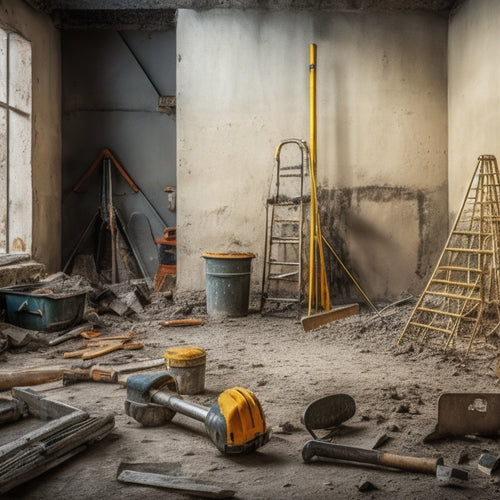
Demolition and Debris Removal
You'll need to prepare your site for demolition by clearing the area, protecting adjacent surfaces, and disconnecting utilities.
Next, you'll decide on a debris disposal method, whether it's renting a dumpster or hauling materials away in a truck.
Site Preparation Needed
Clearing the site of existing structures, debris, and hazardous materials is an essential step in preparing your home for renovation. This involves more than just tearing down walls and removing trash.
You need to guarantee that the site is safe, accessible, and ready for construction.
To achieve this, you'll need to:
-
Secure site access: Guarantee that the renovation team can easily access the site, including parking and storage for equipment and materials.
-
Disconnect utility connections: Shut off electricity, gas, water, and sewage connections to prevent accidents and damage to the existing infrastructure.
-
Remove hazardous materials: Identify and remove asbestos, lead paint, and other hazardous materials that could pose health risks or environmental hazards.
- Clear the site of debris: Remove all unwanted materials, including rubble, trash, and recyclables, to create a clean slate for the renovation project.
Debris Disposal Methods
Demolition and debris removal mark a critical phase of your home renovation project, as they pave the way for new construction. During this stage, you'll need to decide on the most effective debris disposal methods to guarantee a smooth and efficient process.
You'll want to evaluate recycling options for materials like concrete, asphalt, and metal, which can be reused or repurposed. This not only reduces waste but also helps minimize your project's environmental footprint.
Additionally, identify hazardous waste like asbestos, lead-based paint, or PCB-containing materials, which require special handling and disposal procedures. Ascertain you comply with local regulations and guidelines for handling these materials.
When selecting a debris removal service, look for companies that prioritize sustainability and offer eco-friendly solutions. They should provide containers specifically designed for separating recyclable materials from non-recyclable waste.
In addition, make sure to obtain a detailed breakdown of their disposal methods and recycling rates to guarantee transparency and accountability.
Structural Element Removal
Three key phases comprise the structural element removal process: preparation, execution, and cleanup.
During preparation, you'll identify the elements to be removed, such as walls, floors, or roofs, and assess the structural integrity of the remaining structure. This is essential to guarantee the building remains safe and stable throughout the renovation.
To guarantee a smooth removal process, consider the following vital steps:
- Disconnect utilities: Shut off electricity, gas, and water supplies to prevent accidents and damage.
- Protect adjacent areas: Seal off surrounding spaces with plastic sheets or tarps to contain dust and debris.
- Wear safety gear: Equip yourself with gloves, safety glasses, and a hard hat to prevent injuries.
- Label hazardous materials: Identify and label materials like asbestos or lead paint to handle them appropriately.
Remember to take necessary safety precautions to avoid accidents and guarantee the structural integrity of the building.
After executing the removal plan, thoroughly clean up the area to prepare it for the next phase of the renovation project.
Permitting and Inspection Process
Your blueprints are finalized, and your dream renovation is ready to take shape, but before the hammers start swinging, you need to secure the necessary permits and pass inspections. This vital step guarantees your project meets local building codes and regulations, preventing costly rework and potential safety hazards.
You'll need to obtain various permit types, including electrical, plumbing, and building permits, depending on the scope of your project. Each permit type has its own set of inspection requirements, which you must schedule and pass before proceeding with the renovation.
For instance, electrical permits typically require inspections for wiring, circuit breaker installations, and final connections.
Create a permit and inspection schedule to keep track of deadlines and requirements. Be prepared to provide detailed plans and specifications to inspectors, and don't hesitate to ask questions or seek clarification if you're unsure about any aspect of the process.
Material Selection and Ordering
You'll need to research and select materials that fit your project's scope, budget, and timeline, considering factors like durability, sustainability, and aesthetic appeal.
With your material options in mind, you'll need to verify product lead times, which can vary greatly depending on the supplier, material type, and availability.
Accurate lead times will help you create a realistic project schedule and avoid costly delays.
Material Options
Selecting the right materials is a crucial aspect of any home renovation project, as it directly impacts the aesthetic, functionality, and durability of the final result.
You want to make sure that the materials you choose align with your project goals, budget, and personal preferences.
When it comes to material options, you have a wide range of choices. Consider the following:
-
Sustainable materials: Opt for eco-friendly materials that reduce your carbon footprint and promote a healthier living environment. Examples include reclaimed wood, bamboo, and low-VOC paints.
-
High-performance insulation: Invest in insulation materials that provide superior thermal resistance, such as spray foam insulation or fiberglass batts.
-
Durable finishes: Choose materials that can withstand wear and tear, like hardwood flooring or quartz countertops.
- Water-efficient fixtures: Select low-flow showerheads, toilets, and faucets to conserve water and reduce your utility bills.
Product Lead Times
Timing is everything in a home renovation project, and product lead times can make all the difference between staying on schedule and facing costly delays. As you move forward with material selection and ordering, it's essential to factor in the time it takes for products to arrive on site.
You'll need to research and confirm lead times with suppliers, taking into account production schedules, shipping, and inventory management. Effective supplier communication is key to avoiding delays and ensuring a smooth project flow.
Be prepared to ask questions, such as:
- What's the production lead time for custom orders?
- Are there any potential shipping bottlenecks?
- Can the supplier provide regular inventory updates?
By understanding these factors, you can create a realistic project timeline and plan accordingly.
Remember to pad your timeline with a buffer to account for unexpected delays, and prioritize ordering critical materials with the longest lead times first.
With careful planning and attention to detail, you can minimize the risk of delays and stay on track with your home renovation project.
Final Walk-Through and Completion
Your renovation project is nearing its end, and the final walk-through is an essential step to confirm that every aspect of the project meets your expectations. This step guarantees that you're completely satisfied with the result before making the final payment.
During the final walk-through, you'll conduct a thorough inspection of the renovated area, identifying any defects, damages, or incomplete work. This is your opportunity to provide homeowner feedback, which will be addressed by the contractor before project completion.
Here are the key items to focus on during the final walk-through:
-
Final inspections: Verify that all aspects of the project meet the agreed-upon specifications and are free of defects.
-
Punch list creation: Document any incomplete or defective work, and confirm the contractor understands the necessary corrections.
-
Homeowner feedback: Provide feedback on the project's overall quality, highlighting any areas that require improvement.
- Project completion confirmation: Confirm that all work has been completed, and the contractor has fulfilled their obligations.
Frequently Asked Questions
Can I Still Live in the House During the Renovation Process?
You can still live in the house during renovation, but be prepared for renovation noise and consider temporary housing options if you can't tolerate the disruption, ensuring a smoother process for you and the renovation team.
How Do I Handle Unexpected Renovation Cost Overruns?
You'll mitigate unexpected renovation cost overruns by establishing a contingency fund, refining cost estimation through regular budget management, and prioritizing must-haves over nice-to-haves to guarantee your dream home stays within your means.
What if I Change My Mind About Design Elements Mid-Project?
You're not stuck in design limbo! Embracing design flexibility, you can pivot mid-project, but be prepared to reassess timelines and budgets. Prioritize project adaptability to accommodate changes, ensuring your dream home still meets your evolving vision.
Are There Any Tax Benefits to Home Renovation Projects?
You'll be pleased to know that you're eligible for tax deductions on home renovation projects, particularly if you focus on energy efficiency upgrades, such as installing solar panels or energy-efficient windows, which can greatly reduce your taxable income.
How Do I Ensure My Contractor Is Properly Insured?
You'll want to verify your contractor's qualifications, ensuring they hold necessary licenses, certifications, and insurance types, such as workers' compensation, liability, and property damage coverage, to protect yourself and your project from potential risks and financial losses.
Conclusion
You've made it to the final step of your home renovation project timeline! According to the National Association of Home Builders, the average homeowner spends around 12-18 months on a renovation project. By following this 10-step checklist, you'll be well on your way to completing your project on time and within budget. Now, take a deep breath, relax, and enjoy your newly renovated space - you've earned it!
Related Posts
-

Why Do Cinder Block Wall Renovations Cost So Much
You're likely surprised by the high cost estimate for your cinder block wall renovation project, but it's driven by s...
-

5 Best Home Renovation Project Timeline Checklists
You're looking for a clear understanding of the timeline for your home renovation project. A good place to start is w...
-
What Tools to Rent for Block Wall Renovation
When renovating a block wall, it's vital to have the right tools for the job. You'll need demolition tools like pry b...
